
Last updated November 2026.
To roll out uniforms across multiple locations, work backwards from a single go-live date. Appoint one person to own the project and a contact at every site, lock in the range with a small pilot, then collect sizes by a hard deadline. Approve proofs and a pre-production sample before the main run, and have everything packed and labelled by person and site. Deliveries should land a week or more before go-live so there's time to fix gaps. Most rollouts that go wrong do so because of late sizes, unclear ownership or deliveries that arrive with no one at the site ready to receive them, and each phase below is designed to prevent them.
There's a printable checklist at the end of this article that follows the same phases.
"A multi-site rollout is mostly logistics. Getting the right size to the right person at every site on the same morning takes far more planning than choosing the garments."
Jerome Abrahams, owner, Crest Promos
Written by Jerome Abrahams, owner of Crest Promos. Jerome has more than 30 years of experience in promotional products and branded uniforms, and has managed rollouts for businesses ranging from single-site retailers to national brands such as Meta, JCDecaux, Nutrien, White Claw and amps.
The rollout at a glance
| Phase | What gets done | Ready to move on when |
|---|---|---|
| 1. Scope, owners and budget | List sites, staff and garments, name the people involved and check your obligations | The budget and go-live date are set |
| 2. Range and pilot | Choose core lines and test them at one site | The pilot feedback is in and the range is agreed |
| 3. Sizes and order | Send fitting kits and collect every size by a hard deadline | Sizes are in and the order is locked |
| 4. Proofs and production | Approve proofs and a pre-production sample | The sample matches the proof and the schedule is in writing |
| 5. Pack and deliver | Pack by person and site, and deliver a week or more ahead | Every carton has been checked against its packing list |
| 6. Go-live and handover | Hand out uniforms, then switch every site at the same time | The first exchange order has been sent |
| 7. After the rollout | Keep sizes, stock and reorders under central control | This phase is ongoing |
How long each phase takes depends on your headcount, the garments you choose and whether they're held in local stock. Stock garments with embroidery usually take a few weeks from proof approval, while custom fabrics or colours can take two months or more, so confirm lead times with your supplier before you set a go-live date.
Phase 1: scope, owners and budget
Start by writing down exactly who needs what. List every site, the number of staff at each, the roles they work in and how many garments of each type each person gets. Include casuals and staff on leave, who are easy to forget and hard to fix later.
Then name the people involved. One project owner makes the decisions and is the single point of contact for the supplier. Each site needs a site contact who chases sizes, receives deliveries and hands uniforms out on the day. Agree who signs off the design, the proofs and the budget, so approvals don't stall while people wait for each other.
Check your obligations before you set the budget:
- If the uniform is compulsory, many modern awards require employers to supply it or reimburse its cost, and some also require a laundry allowance. The General Retail Industry Award, for example, requires employers to reimburse the cost of special clothing they require staff to wear. Look for the "Allowances" clause in the award or enterprise agreement that covers each group of staff.
- Protective items such as hi-vis or safety boots count as personal protective equipment, which the business must provide. Our guide to hi-vis workwear standards covers this in detail.
- For a non-compulsory uniform that staff can claim at tax time, the design needs to be on the Register of Approved Occupational Clothing. AusIndustry recommends applying before production starts, so build that into your timeline.
Finally, set the go-live date and work backwards from it. A fixed date gives every later deadline a reason to be met.
Phase 2: choose the range and run a pilot
Choose an approved product range that suits each role and can be reordered consistently across multiple sites. Core lines from established workwear and corporatewear brands are far easier to keep consistent across sites and years than seasonal styles. Our guide to choosing a uniform supplier covers fabrics, fit and range continuity in more detail.
Before committing to a full order, run a short pilot. Give a small group at one site the new garments to wear for a couple of weeks of normal work, including a few washes. Ask them about fit, comfort, how the fabric handles the job and how the logo looks after washing. A pilot catches problems such as a fabric that's too hot for a warehouse or a cut that doesn't suit the role, while changes are still cheap.
Decide at this stage whether each item is compulsory or optional, how many of each item staff receive and what happens to the old uniform. Limiting sites to approved products also avoids inconsistent branding from independent sourcing. These rules go into a short uniform policy that every site can share with staff before go-live.
Phase 3: collect sizes and lock the order
In our experience, sizing is the critical step before ordering. People are busy, forms get lost and one site that's a week late holds up everyone else.
Send each site a fitting kit with one of each garment in every size, so staff can try them on rather than guess, which helps minimise costly returns and exchanges. Give every site contact the same simple form or spreadsheet and one consistent size chart, with columns for name, site, role, each garment, size and any fit notes, such as a longer length or a women's cut. Set a hard deadline, share a progress update with site contacts every few days and escalate early when a site falls behind.
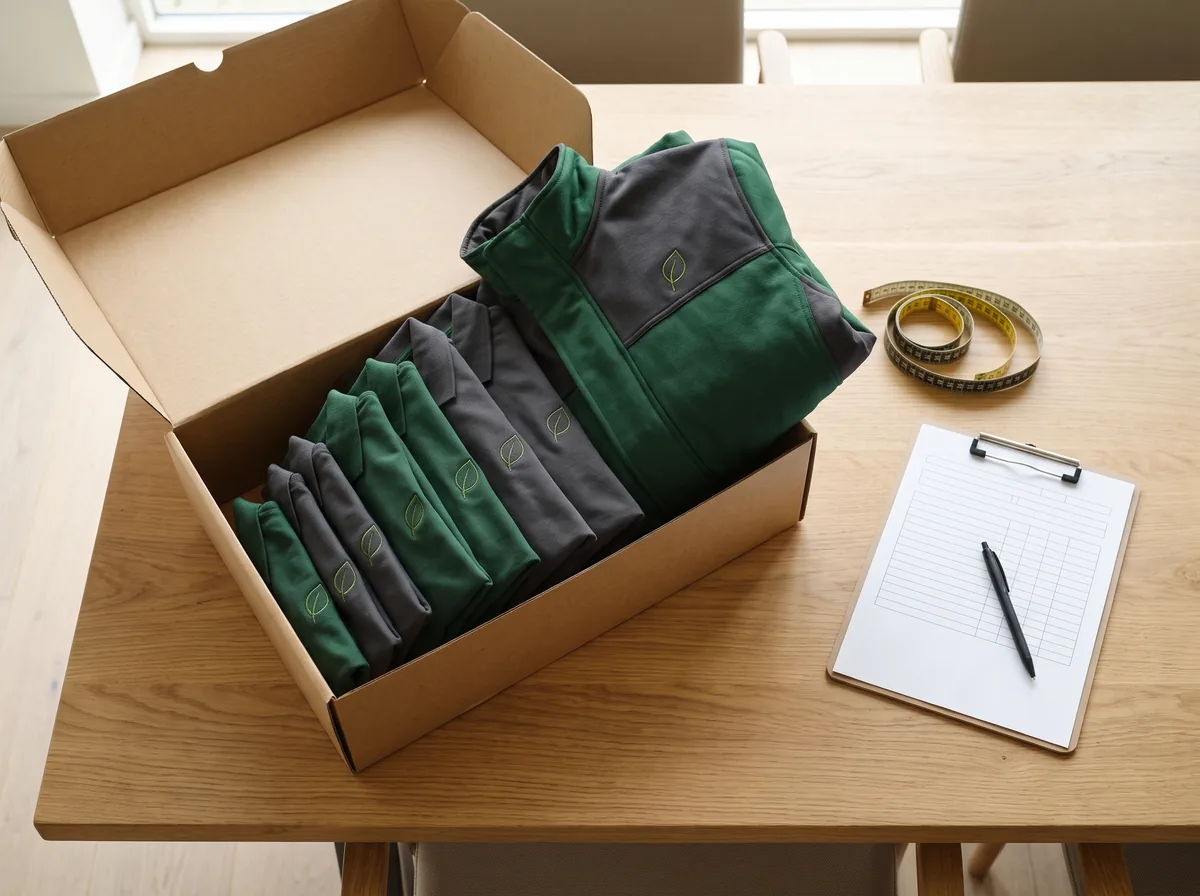
Once sizes are in, base the order on those numbers, then add a small amount of buffer stock in the most common sizes at each site to cover early exchanges, new hires and damaged items in the first few weeks. Then lock the order. Late changes after this point cause delays and reprints, so agree a cut-off date with the supplier and stick to it.
Phase 4: proofs, samples and production
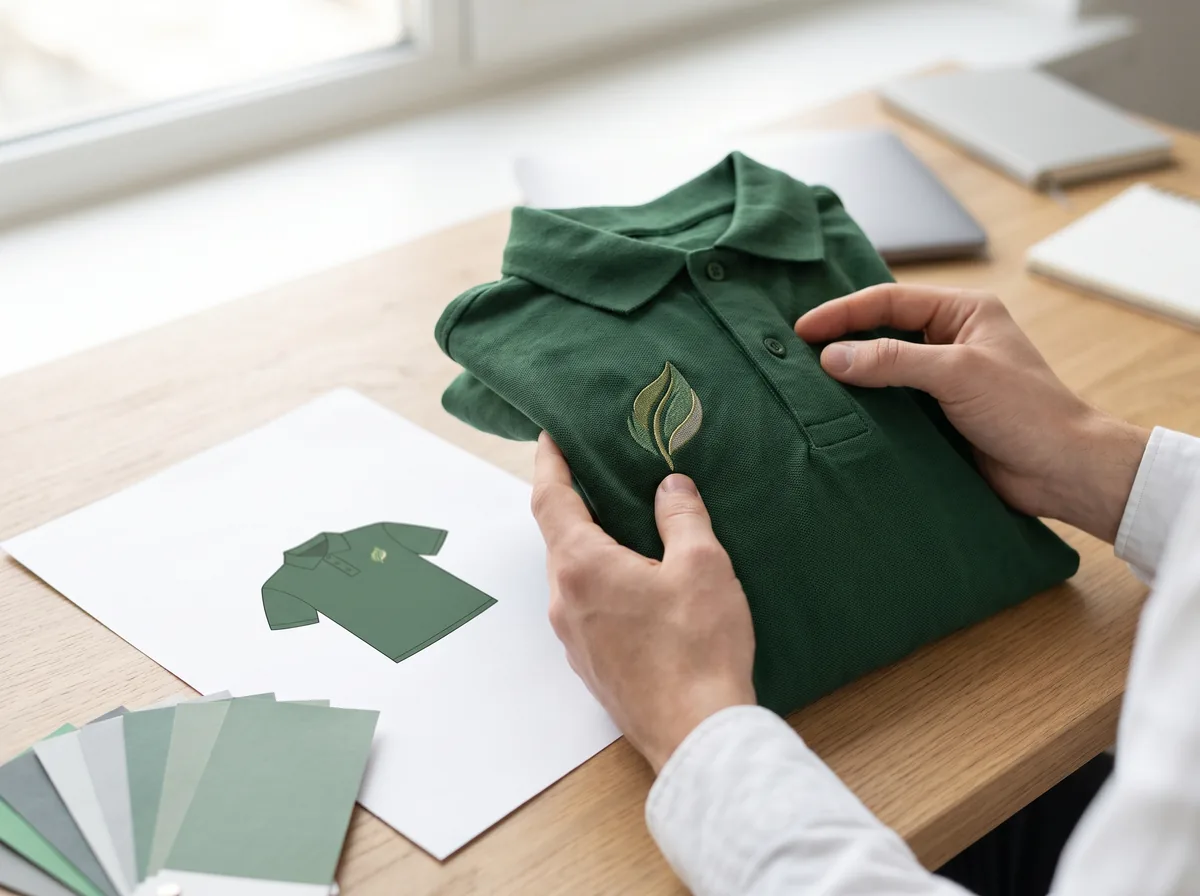
Before anything goes into production, approve a digital proof for every garment and logo position. Check the logo size and placement, thread or ink colours against your brand's Pantone references and any names or role titles. Ask for a pre-production sample of at least one decorated garment and compare it with the proof under daylight.
Confirm the production schedule in writing, including when each part of the order will be finished and when it will ship. If garments are coming from more than one source, such as shirts from one brand and jackets from another, ask the supplier to confirm each item's availability before you lock the go-live date, allowing for different lead times across garments and locations.
Make sure your logo files, embroidery files, colours and placement instructions stay on record with the supplier. Every future reorder will need to match this first run exactly.
Phase 5: pack, label and deliver to each site
How the order is packed decides how easy go-live day is, so plan distribution around each type of site, whether it's an office, warehouse or retail store. Ask the supplier to pack each person's garments together in a bag labelled with their name, role, site and sizes, and to group those bags into cartons by site. Each carton should carry the site name, delivery address, site contact and a packing list showing whose uniforms are inside.
Plan deliveries so they arrive at least a week before go-live. That leaves time to check every carton against the packing list, swap any wrong sizes and chase anything missing. Confirm each site's delivery address, receiving hours and any access instructions, such as loading dock times or security sign-in, and give the courier the site contact's mobile number.
When cartons arrive, the site contact should count them against the delivery note, open them, check a sample of bags and report any problems to the project owner the same day. Simple measures such as on-time delivery and order accuracy by site show how the rollout is tracking.
Phase 6: go-live and handover
Share the uniform policy with staff a week or two ahead and explain the reasons for the change, so everyone knows when it happens, what they're receiving, how to care for it and what to do with the old uniform. Ask site contacts to hand out bags in the days before go-live, rather than on the morning itself, so any fit problems surface while there's still time to swap them.
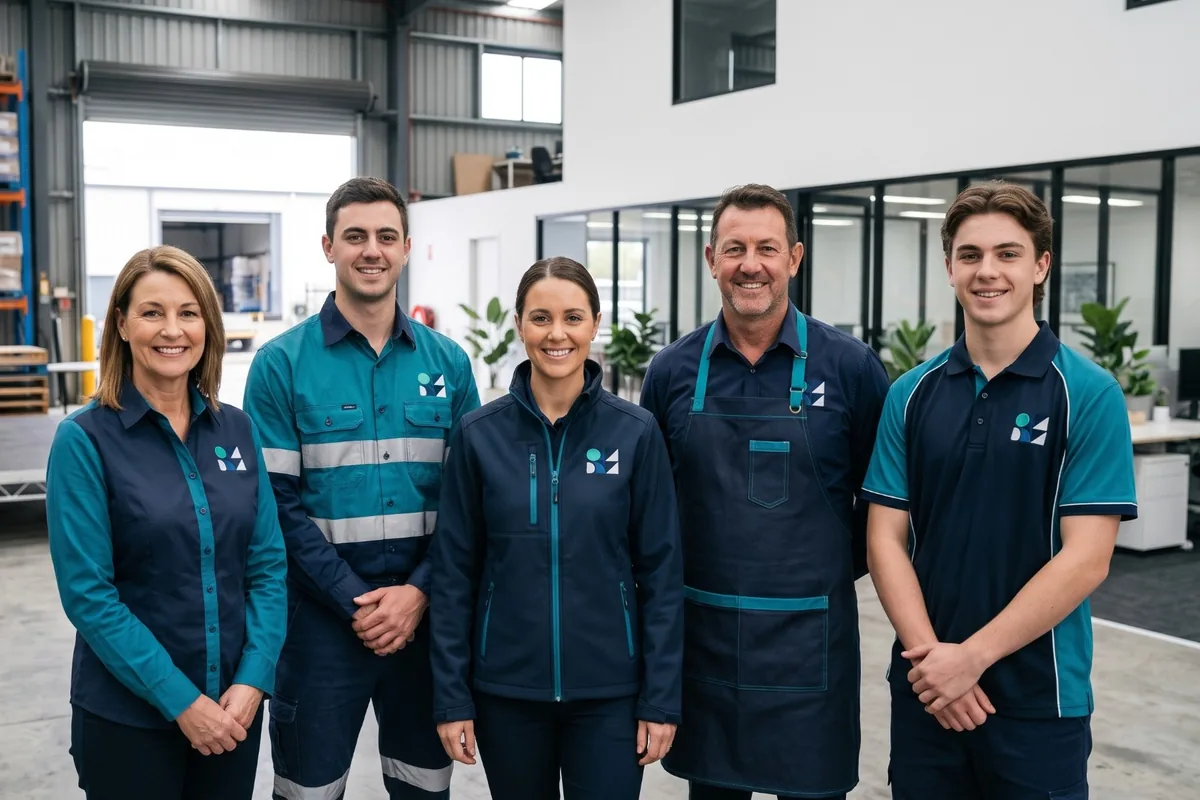
On go-live day, every site switches at the same time to keep the brand experience consistent for customers. A team photo at each site is a good way to mark the change and gives you a quick visual check that everything matches.
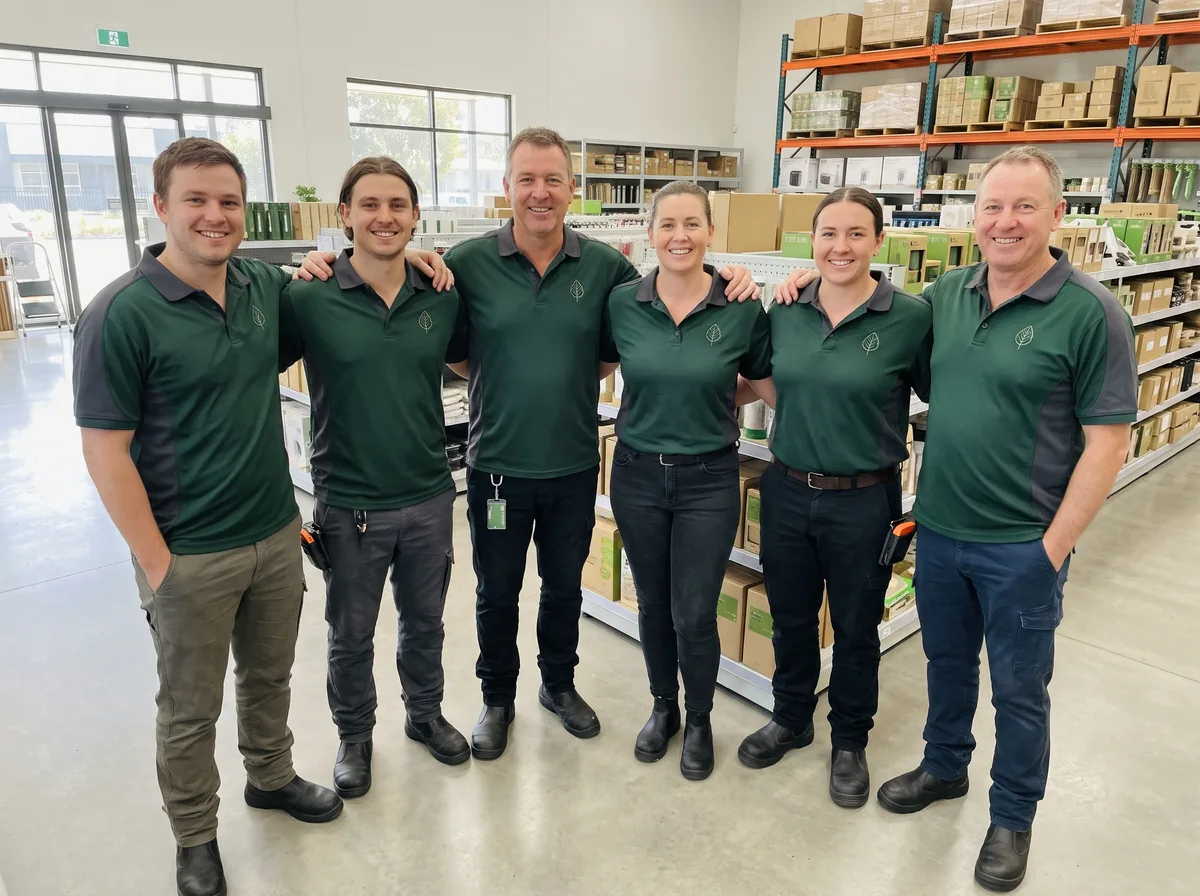
In the first fortnight, collect fit issues and missing items through one channel, such as a shared form or the project owner's inbox, and send them to the supplier as a single consolidated exchange order rather than a stream of one-off requests.
Phase 7: after the rollout
The rollout ends on go-live day, but the uniform program carries on. New starters arrive every week, people change sizes and garments wear out, and each of these is a chance for sites to drift apart. As the workforce grows, the same repeatable process should cover new employees, replacements and replenishment.
A few things keep every site consistent:
- Keep a central size register, updated as people join and leave, so reorders only need a name.
- Hold a small pool of uniform stock in common sizes, with clear stock control rules, and decide whether to hold it centrally, at each site or a mix of both, so replacements are ready when they're needed.
- Route all reorders through one central system, so locations can only order approved items.
- Use digital ordering tools rather than manual tracking, so you can see what each site is ordering.
- Review stock levels, stock movements and reorder patterns every few months, and use that data to set your buffers and avoid excess stock.
- Run periodic compliance checks so each location keeps ordering the right range and following brand standards.
- Ask staff for feedback a few months in, while there's still time to adjust the range at the next reorder.
Plan what happens to the old uniform as well. Branded clothing in circulation after a rebrand or after someone leaves can be a security and reputation risk in some industries. Collect old garments at go-live, then reissue, donate with logos removed or recycle them.
Common rollout problems and how to prevent them
| Problem | How to prevent it |
|---|---|
| One site's sizes arrive late and hold up the whole order | Set a hard deadline, report progress to every site contact every few days and escalate early |
| Staff guess their size and half the order doesn't fit | Send fitting kits to each site and include a buffer of common sizes |
| The garment chosen isn't in stock in every size | Confirm stock for every size and colour before locking the go-live date |
| Logo colours don't match the brand | Approve proofs with Pantone references and a pre-production sample |
| Cartons arrive when no one is on site to receive them | Confirm receiving hours, access instructions and a site contact's mobile for every delivery |
| Uniforms are handed out to the wrong people | Pack and label by person, and include a packing list in every carton |
| Sites drift back to different garments within a year | Centralise reorders and keep artwork and garment choices on file with one supplier |
| Staff are out of pocket for a compulsory uniform | Check the relevant award or agreement for uniform and laundry allowance clauses before setting the budget |
Download the checklist
The checklist follows the same phases as this guide. Page one has a tick box for every step, with space at the top for the project owner, go-live date, supplier contact and number of sites. Page two is a site tracker for site contacts to update as sizes come in and cartons arrive, so the project owner can see which sites are behind.
Download the multi-site uniform rollout checklist (PDF)
How Crest Promos runs multi-site rollouts
Crest Promos has supplied branded uniforms and merchandise to Australian businesses for more than 30 years, including national brands such as Meta, JCDecaux and Nutrien. On a multi-site rollout, one contact at Crest works with your project owner from the first scope through to go-live. We send fitting kits to each site, pack every order by person and site and can hold stock of common sizes so new starters aren't left waiting. That structured process reduces manual work for internal operations and procurement teams. Digital proofs are free.
"The rollouts that run smoothly are the ones where someone at each site knows the cartons are coming and already has the packing list when the courier arrives. Most of the problems we fix in go-live week start with a delivery nobody was expecting."
Jerome Abrahams, owner, Crest Promos
Tell us about your sites, your team and your go-live date. We'll suggest suitable garments, with pricing and a free proof.
- Fair Work Ombudsman, General Retail Industry Award MA000004, allowances clause covering special clothing and laundry
- National Retail Association, Understanding uniform and laundry allowances
- Australian Taxation Office, Clothing, laundry and dry-cleaning expenses
- AusIndustry, Register of Approved Occupational Clothing, business.gov.au
- Safe Work Australia, Personal protective equipment for workers
- Crest Promos, What hi-vis workwear standards do businesses need to meet?
- Crest Promos, What should I look for in a company uniform supplier?