Updated November 2026 to reflect AS 4602.1:2024 and AS/NZS 1906.4:2023.
In Australia, hi-vis workwear for high-risk work is designed to AS 4602.1:2024, which replaced AS/NZS 4602.1:2011 in June 2024, and its fabric and reflective tape are tested to AS/NZS 1906.4. Every compliant garment carries a class: D for daytime, N for night or D/N for both. Class N and D/N garments made to the 2024 edition also carry a level from 1 to 3. On top of the standard, your work health and safety duties, your industry and each site's own rules decide what your people actually need to wear.
"The hi-vis problems I see most often are a site asking for one class and the business buying another, or a logo stitched straight through the tape."
Jerome Abrahams, owner, Crest Promos
Jerome Abrahams owns Crest Promos, an Australian promotional products and uniform supplier known for hands-on customer service and quality products. He has 30+ years of experience in the industry and has worked with brands including Meta, JCDecaux, Nutrien, White Claw and amps.
Last reviewed November 2026. This article is general information. Always confirm hi-vis requirements with the person or business that controls each site.
Choosing a class
Class D is for daytime use only and relies on fluorescent colour. Class N is for nighttime visibility with retroreflective materials. Class D/N combines both fluorescent and retroreflective elements, so choose it if the light changes during a shift, or if work starts before sunrise or finishes after dark. Daytime-only garments aren't suitable for visibility at night. A site or principal contractor can still require a specific level, colour or garment type, and their specification comes first.
The Australian high visibility standards behind hi-vis
AS 4602.1:2024 is the garment standard within Australia's dual-standard hi-vis compliance framework, with AS 4602.1 covering garments and AS/NZS 1906.4 covering materials. It sets how certified materials are cut and assembled into garments, including the minimum requirements for how much high-visibility material a garment needs, where it sits on the body, how the reflective tape is laid out and what the label must say. It covers occupational garments for people exposed to moving traffic, moving plant or equipment in high-risk situations, and it excludes garments for fire services. This high visibility workwear is treated as personal protective equipment under WHS duties when it is used to control visibility risks. Standards Australia published it on 28 June 2024 to replace AS/NZS 4602.1:2011. It was released as an Australian-only standard, so New Zealand still uses the 2011 edition.
AS/NZS 1906.4 is the materials standard, including materials used for road traffic control purposes. It covers the fluorescent fabric and the retroreflective tape themselves, including their colour, brightness and reflectivity, how they perform under vehicle headlights or other artificial lighting, and how well they hold up to washing and sunlight. It also allows for limited use of non-fluorescent materials where natural-fibre requirements apply, subject to the material standard's colour rules. The current edition is AS/NZS 1906.4:2023. International equivalents include EN ISO 20471 and ANSI/ISEA 107, but Australia uses its own standards.
Changes in the 2024 edition
AS 4602.1:2024 adds Levels 1 to 3 within Class N and Class D/N, based on how much retroreflective tape a garment carries and where it sits, including on the arms and legs. It also covers trousers and the lower half of coveralls for the first time and defines classes for ensembles (a top and bottom worn together). It tightens the brightness requirements for yellow fabric and updates the design diagrams, including for women's fits.
The new edition doesn't make existing gear illegal. A garment certified to AS/NZS 4602.1:2011 doesn't become non-compliant because the standard was revised, and there's no formal cut-off date. Even so, businesses should not assume older classifications will satisfy current site requirements. In practice, check what each site or principal contractor now specifies, since some tenders and site rules have started asking for the 2024 standard.
Reading a compliance label
A compliant garment carries a permanent label on the garment itself, not just on the packaging, stating the standard and class. On a garment made to the 2024 edition, a label might read "AS 4602.1:2024 Class D/N Level 2". On older stock it will read something like "AS/NZS 4602.1:2011 Class D/N".
| On the label | What it tells you |
|---|---|
| AS 4602.1:2024 or AS/NZS 4602.1:2011 | Which edition of the garment standard it was certified to |
| Class D | Fluorescent fabric for daytime visibility, with no tape requirement |
| Class N | Retroreflective tape for visibility under headlights or artificial light |
| Class D/N | Both fluorescent fabric and retroreflective tape, for any light |
| Level 1, 2 or 3 | For Class N and D/N under the 2024 edition, how much tape the garment carries and where |
Be wary of garments labelled only with an overseas class, such as "Class 2" or "Class 3". Those numbers come from the European and US systems. A garment with no AS or AS/NZS 4602.1 marking hasn't been shown to meet the Australian standard, even if it looks the same. Some garments are certified to both systems, and those will show both markings.
Checking a certification claim
A label is only as good as the testing behind it, and cheap imported vests sometimes carry markings they haven't earned. For any significant order, ask the supplier for the garment's test report or certificate of compliance. It should name the standard and edition, the class and level, the garment style it covers and the laboratory that did the testing.
Testing by a NATA-accredited laboratory gives the most confidence. In Australia, AWTA Product Testing, for example, is NATA accredited to run the full range of hi-vis tests. If a supplier can't produce documentation for a garment, treat its compliance claim with caution. A false or unsupported certification claim can create non-compliance risks, and documented test evidence also helps safety officers during audits or internal compliance checks.
Industry and site rules
The standard sets the minimum for the garment. Employers are legally bound to assess site risks and provide suitable hi-vis clothing as PPE under WHS duties. Industry practice, state road authorities, rail operators and site owners often add their own requirements on top, so the safest approach is to get the specification in writing from whoever controls the site.
| Work setting | What's commonly required | Worth checking |
|---|---|---|
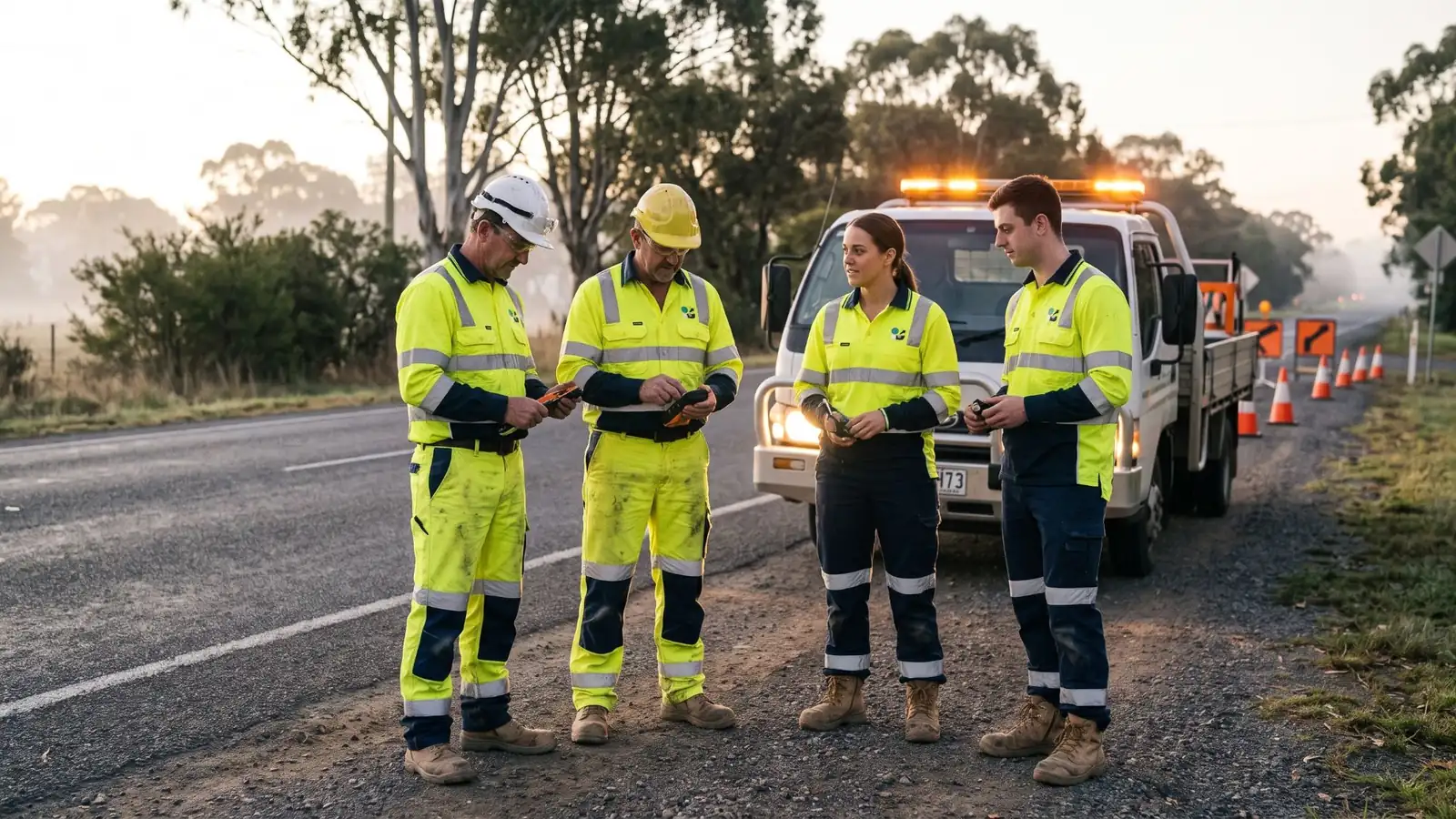
| Roadworks and traffic control | Class D/N | The state road authority's traffic management requirements and any contract specification |
| Rail corridor work | Garments in the colour set by the rail operator, often fluorescent orange | Some operators assign different colours to different roles, so confirm with the network |
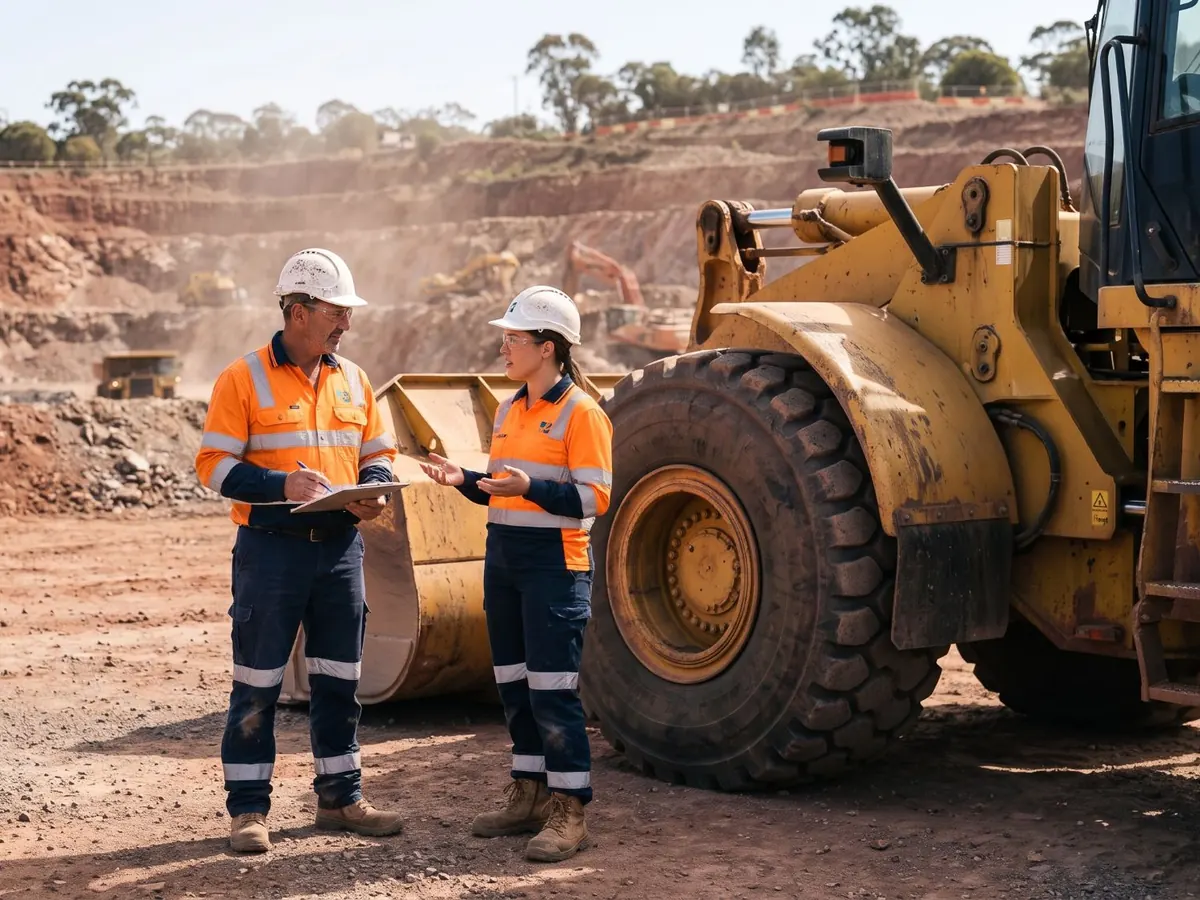
| Mining and quarrying | Class D/N, frequently in orange so workers stand out against yellow machinery | The mine's own PPE standard, which often specifies colour, tape layout and fabric |
| Construction sites | Class D or D/N depending on hours and plant movements | The principal contractor's site rules, which increasingly name the 2024 standard |
| Warehouses and logistics yards | Class D vests or shirts where forklifts and trucks operate | Lighting conditions inside and outside, and shift start and finish times |
| Visitors and contractors | Usually a Class D or D/N vest issued at sign-in | Whether the site supplies vests or expects visitors to bring their own |
The standard approves fluorescent yellow (often called lime or yellow-green) and fluorescent orange-red for high-risk garments. Orange is common in mining, quarrying and rail, where it stands out against yellow plant and green surroundings. Yellow is common on roads and building sites. Neither colour is more compliant than the other, so the choice comes down to what makes workers easiest to see in that environment, what the site specifies, and the lighting on site.
Hi-vis for electrical and fire risks
Standard hi-vis isn't flame resistant. Most everyday hi-vis is polyester-rich, and both the fabric and ordinary reflective tape can melt and burn in a flash fire or electric arc, which can make injuries worse. In some electrical or static-sensitive settings, garments made with natural fibres are used for safety reasons, but they offer more limited daytime visibility than fluorescent polyester-rich options.
Workers exposed to electrical arc or flame hazards, such as electricians, line workers, some utilities crews and parts of the mining and oil and gas industries, need garments that are both hi-vis and arc-rated or flame resistant. These are certified to an arc protection standard such as IEC 61482-2 as well as the hi-vis standard, and carry an arc rating (often shown as ATPV in cal/cm²). In the Australian electricity supply industry, the Energy Networks Association's NENS 09 guideline is widely used to set minimum arc protection for clothing.
If your team faces electrical or fire risks, start with the arc or flame rating your risk assessment requires, then choose hi-vis garments that meet it. Don't add reflective tape or decorations to arc-rated garments unless the manufacturer approves them, since non-rated additions can burn.
Keeping hi-vis compliant
Under the model Work Health and Safety Regulations, the business that directs the work must provide the PPE workers need, including high-visibility clothing, unless another business has already provided it. That duty extends to making sure the PPE is suitable, fits properly and is kept clean and in good condition, and employers should also provide training on its use, care and replacement. Treat hi-vis workwear as a controlled safety product, not just a uniform, because its performance changes with condition.
Victoria works differently. It hasn't adopted the model laws and instead has its own Occupational Health and Safety Act 2004 and Occupational Health and Safety Regulations 2017. The practical outcome for hi-vis is similar: employers need to supply the PPE workers require, and Victoria's Labour Hire Authority has said workers shouldn't be charged for PPE they need for their job. Whichever state you're in, check your regulator's guidance for anything specific to your industry.
Hi-vis loses performance over time. Fluorescent fabric fades with sun and washing, and retroreflective tape cracks, peels or wears thin. Wash life varies by tape, so check the care label and supplier guidance. A faded or damaged garment may no longer provide the visibility its label claims, which can increase the risk of workplace accidents.
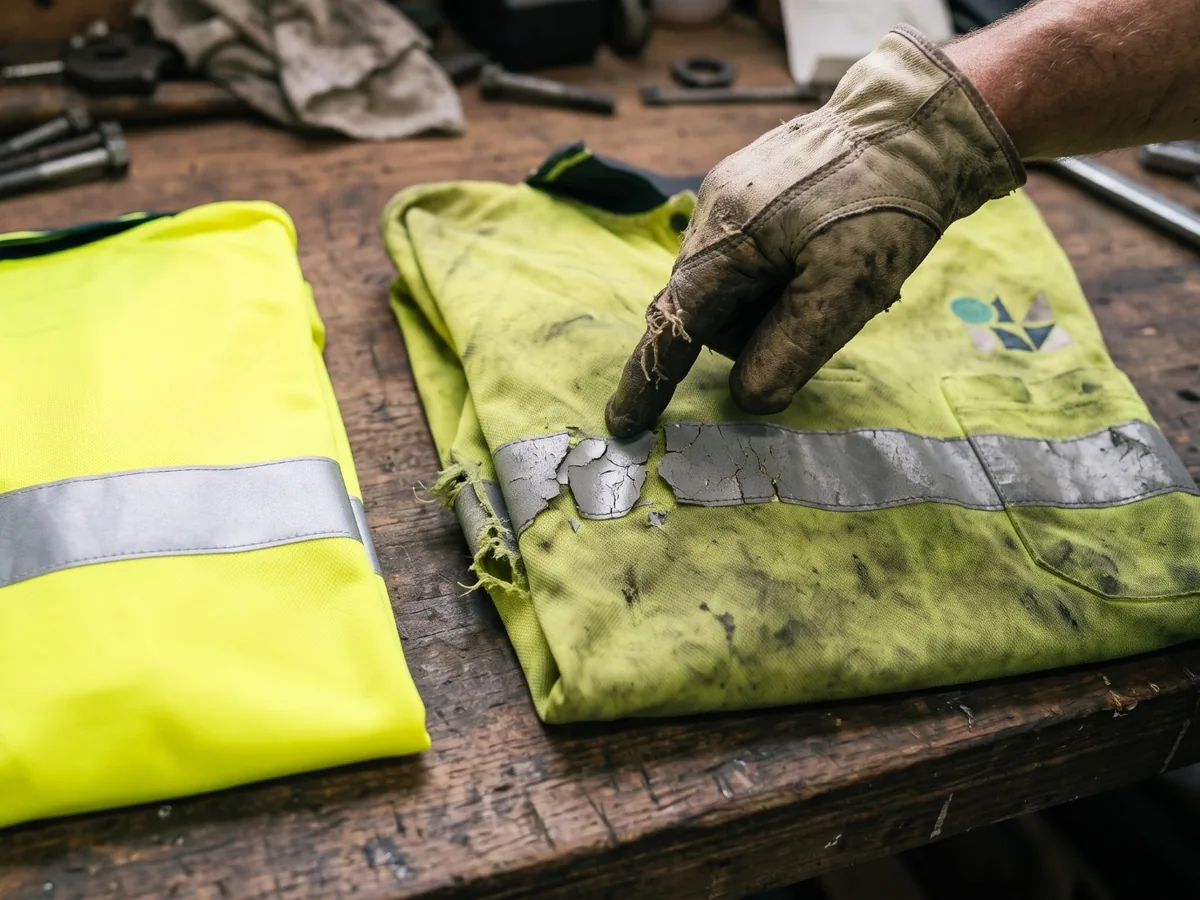
Some practical steps help keep garments performing:
- Wash garments according to the care label, since harsh detergents, bleach and high dryer temperatures shorten their life.
- Inspect hi-vis daily before use, checking for fading, stains that cover the fluorescent area and damaged tape, and make sure it's worn correctly.
- Replace garments with reduced visibility immediately, rather than waiting for a set date.
- Keep spare stock in common sizes so a damaged garment can be swapped straight away.
- Record which standard, class and level each garment meets, so you can match it to each site's requirements.
Branding hi-vis without breaking compliance
A logo on hi-vis is fine, as long as it doesn't take away the visibility the garment was certified for. The standard specifies how much fluorescent and retroreflective material a garment needs and where it sits, so anything printed or stitched over those areas can reduce the garment below what its label says.
A few rules of thumb:
- Keep logos off the retroreflective tape completely. Stitching through tape can damage it, and printing over it blocks the reflection.
- Use the non-fluorescent contrast panels where the garment has them, often on the lower body, sleeves or yoke.
- Keep logos on the fluorescent fabric small, such as a left chest logo, rather than a large back print.
- Prefer heat transfers or small embroidery suited to the fabric, and ask whether the decoration method affects the garment's certification.
- Check the garment manufacturer's guidance on decoration, since some publish the areas that can be branded.
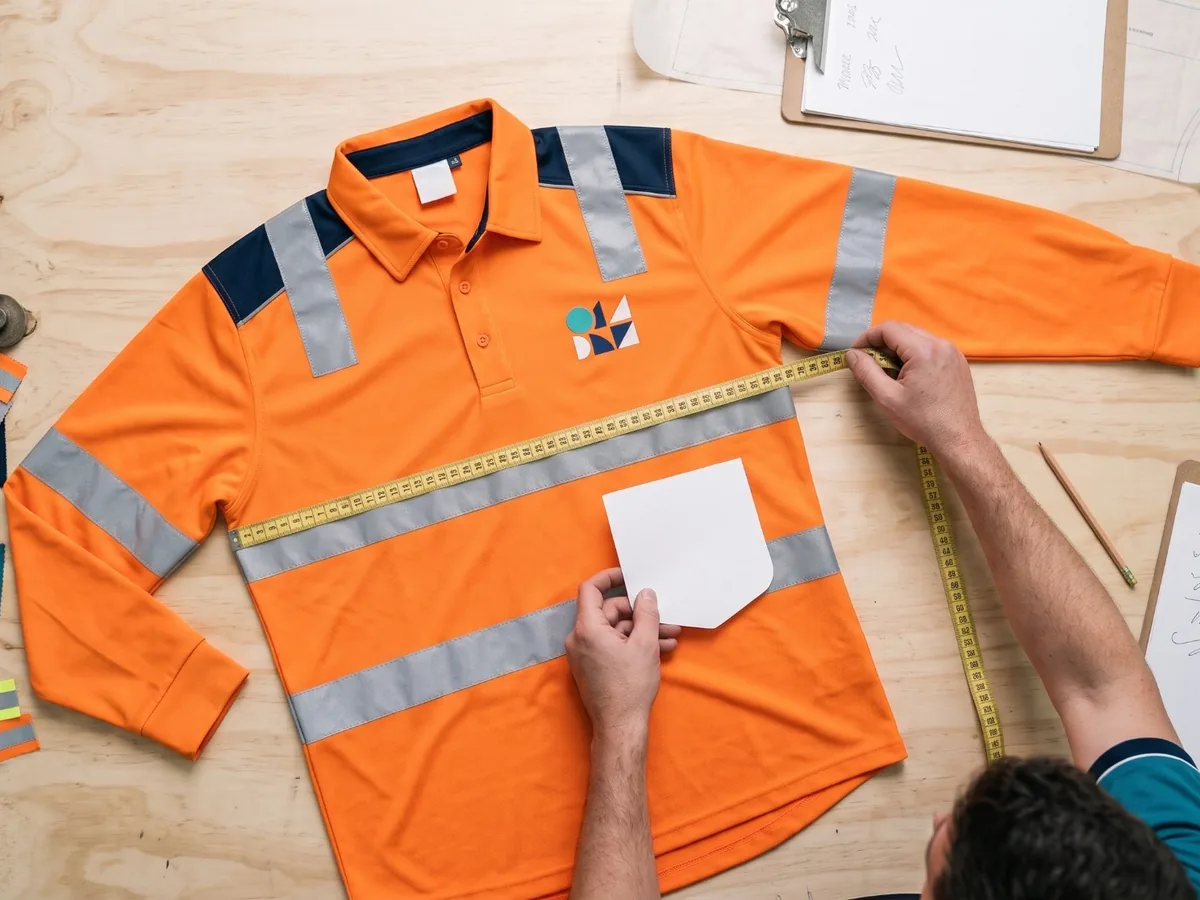
From our own work, the details that trip businesses up are rarely in the standard itself. We've supplied hi-vis that had to pass a mine site induction, where the site's PPE rules set the colour and tape layout on top of the standard. We've also recommended heat transfers instead of embroidery on hi-vis, because stitching would have perforated the reflective tape.
An experienced supplier can save you a lot of time here. They should ask which class and level each site needs before quoting, recommend where your logo can go and show you a proof on the actual garment before production. Crest Promos, for example, supplies certified hi-vis with decoration placed to keep the garment compliant, provides free quotes and digital proofs and has rolled out uniforms across multiple sites.
"Before quoting hi-vis, I always ask which class each site needs. It's a small question that stops a whole order being knocked back at the gate."
Jerome Abrahams, owner, Crest Promos
Hi-vis FAQs
Is hi-vis a legal requirement for every workplace?
No single law says every worker must wear hi-vis. The requirement comes from your work health and safety duty to manage risks. If your risk assessment shows workers are exposed to moving vehicles, plant or equipment, hi-vis is usually one of the controls, and many sites and contracts make it mandatory.
Do we have to replace our hi-vis now that AS 4602.1:2024 is out?
No. Garments certified to AS/NZS 4602.1:2011 don't become non-compliant because the standard was revised. Replace them as they wear out, and check whether any site or contract you work on now asks for the 2024 edition.
How often should hi-vis be replaced?
There's no fixed timeframe. Replace garments when the fluorescent fabric has faded, the reflective tape is cracked or peeling, or the garment is torn or heavily stained. Garments worn every day in harsh conditions will need replacing far sooner than ones worn occasionally.
Can workers wear a hi-vis vest over their normal clothes?
Often, yes. A certified vest is a common choice for visitors, occasional site work and indoor settings like warehouses. For people working outdoors daily, a certified hi-vis shirt or jacket is usually more practical, gives more coverage and is less likely to be taken off.
What hi-vis suits hot Australian summers?
Look for lightweight cotton drill or breathable fabrics with vented panels, and long sleeves for sun protection. Cancer Council recommends outdoor workers cover as much skin as possible, so for outdoor daytime work a long sleeve hi-vis shirt with a UPF 50 or 50+ rating under AS/NZS 4399 is a good choice. The UPF rating is an added feature, not a hi-vis requirement. Pair it with sun-safe headwear, which is covered in our guide to branded headwear for outdoor work teams.
Tell us which class each site needs, your quantities and your logo. We'll suggest suitable garments, with pricing and a free proof.
- AS 4602.1:2024 standard details (Standards Australia)
- Occupational Health and Safety Act and Regulations (WorkSafe Victoria)
- Workers shouldn't pay for required PPE (Labour Hire Authority Victoria)
- Arc flash garment standards, including IEC 61482-2 and ENA NENS 09 (Elliotts)
- Flame resistant and hi-vis compliance (Ergodyne)
- Outdoor workers and UV (Cancer Council Australia)
- AS 4602.1:2024 High visibility safety garments, Part 1 (Standards Australia, via Accuris)
- AS 4602.1:2024 preview and scope (Standards Australia, via Intertek Inform)
- Key updates to hi-vis garment classification in AS 4602.1:2024 (Bunzl Safety)
- High visibility clothing testing (AWTA Product Testing)
- Australian hi-vis workwear standards explained (Metro Workwear)
- Hi-vis classes, colours and overseas class numbers (AIMS Industrial)
- PPE duties for businesses (Safe Work Australia)
- Use of safety vests in the rail corridor (OTHR)