A good employee onboarding kit includes the paperwork and practical information a new starter needs in week one, such as the Fair Work Information Statement, tax forms, a first-week schedule, login details, key policies and a contact list. Add a few quality branded items they'll actually use and something personal from the people they'll be working with. For Australian employers and HR teams, getting that mix right helps new employees feel welcomed, organised and valued from day one, which shapes how quickly they settle in and how they view the business.
A kit full of cheap merch can leave a worse impression than no kit at all, so the mix matters more than the size of the box. This guide looks at the legal paperwork to include, the practical details new starters need, which branded items are worth buying, personal touches that make the pack feel considered, what to do for remote employees, how to budget and order well, and what to leave out.
"A welcome kit is often the first physical thing someone gets from their new employer. If it's well made and clearly thought about, it tells them they've joined a business that cares about the details."
Jerome Abrahams, owner, Crest Promos
Written by Jerome Abrahams, owner of Crest Promos, an Australian promotional products company known for its customer service and for pushing for quality across the industry. Jerome has more than 30 years of experience in branded merchandise, including staff and welcome kits for businesses around Australia.
Onboarding research comes from Gallup and a 2026 welcome kit survey by US merchandise company Custom Ink. Employment obligations come from the Fair Work Ombudsman and the Australian Taxation Office. Product advice was checked against what Crest Promos sees on real staff kit orders. Sources are listed at the end.
Last reviewed October 2026. This article covers general information only and isn't legal or HR advice.
The purpose of an onboarding kit
Most businesses have some kind of onboarding process, but few employees rate theirs highly. Gallup found only 12% of employees strongly agree their organisation does a great job of onboarding new staff, and that new employees typically take around 12 months to reach their full potential in a role. The first 90 days are often when new hires start moving from learning the role to contributing on their own.
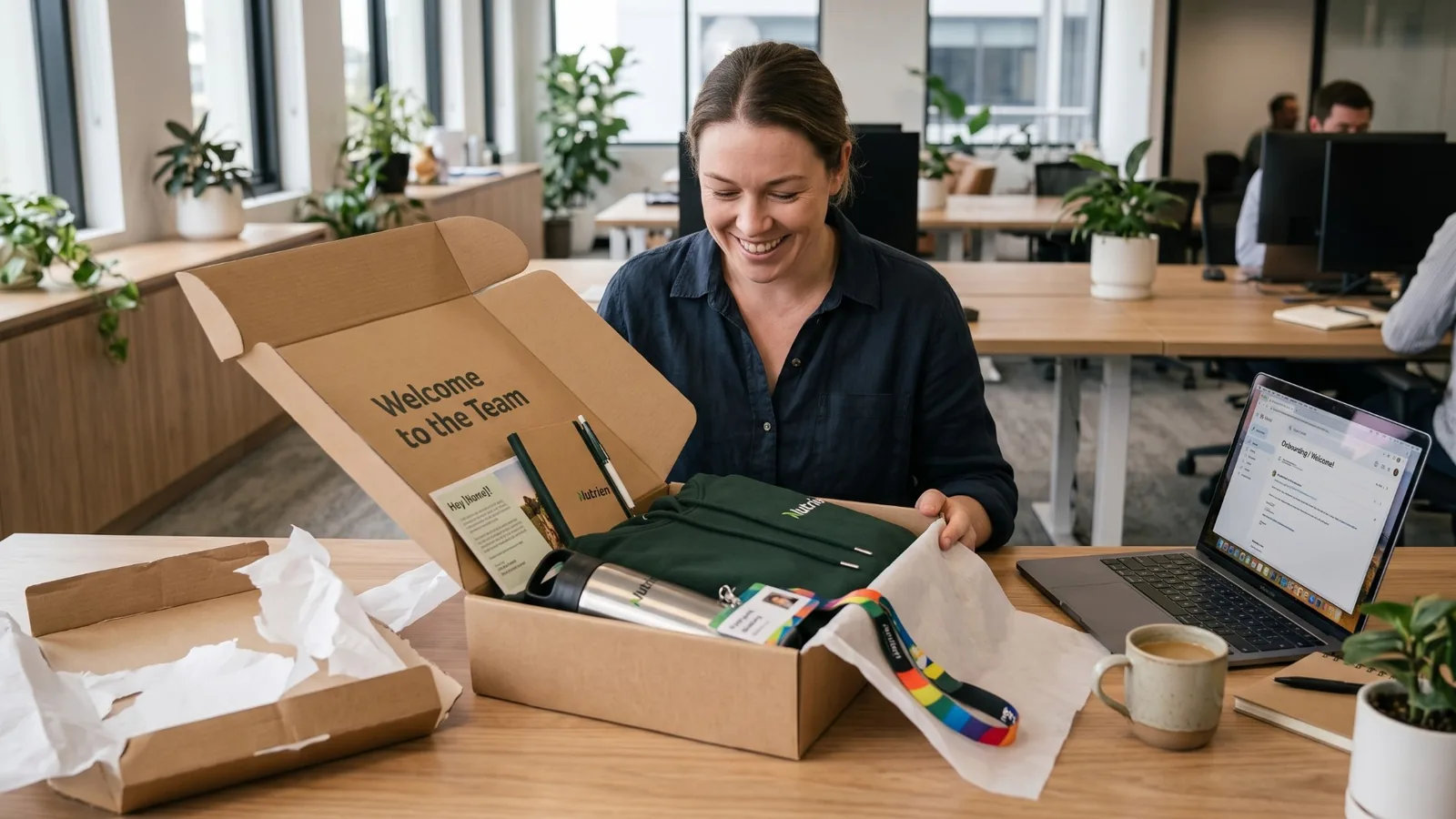
A welcome kit won't fix a weak process by itself, but it can support a good one. It sets expectations early and gives new starters their first physical sense of the company's culture.
Custom Ink's 2026 survey of more than 300 employees found that people who received their kit late were more likely to say it took time to feel included than people who received no kit at all (49% compared with 44%). Aim to have it ready on day one, or delivered the week before for remote staff.
Gallup also found employees were 3.4 times as likely to rate their onboarding as exceptional when their manager took an active role. That makes the new starter's manager a natural part of the kit, whether they hand it over in person or write the note that goes inside it.
Paperwork, the employee handbook and practical information
Some of what goes in an onboarding kit in Australia is required by law, so it's worth building the kit around those items first. Onboarding starts as soon as the candidate accepts the job offer, so the paperwork can go out before their first day.
Employers must give every new employee the Fair Work Information Statement before, or as soon as possible after, they start. Casual employees must also get the Casual Employment Information Statement, and anyone on a fixed term contract needs the Fixed Term Contract Information Statement. These can be handed over in person, emailed or sent as a link, so a printed copy in the kit is optional as long as it has been provided.
New starters will also need a tax file number declaration and a superannuation standard choice form. The ATO says employers must fill in their default super fund details on the choice form before handing it over. Many employees now complete both through myGov, so a short card explaining which method your business uses saves a lot of back and forth with payroll. Sorting these before the start date also takes pressure off HR in week one.
Beyond the forms, a new starter usually needs:
- a first-week schedule showing who they'll meet and when
- login details or setup instructions for email, systems, building access and equipment
- key policies, such as leave, work health and safety and IT use, or a link to the employee handbook or intranet where they live
- a contact list covering their manager, an onboarding buddy if you assign one, payroll and IT
- practical details like parking, public transport, kitchen etiquette and where to get lunch nearby
Together, these help a new starter understand what's expected of them and get productive sooner.
Put the paperwork in a branded folder or envelope rather than loose in the box. It keeps everything together and makes the important documents easy to find again later.
Branded items worth including
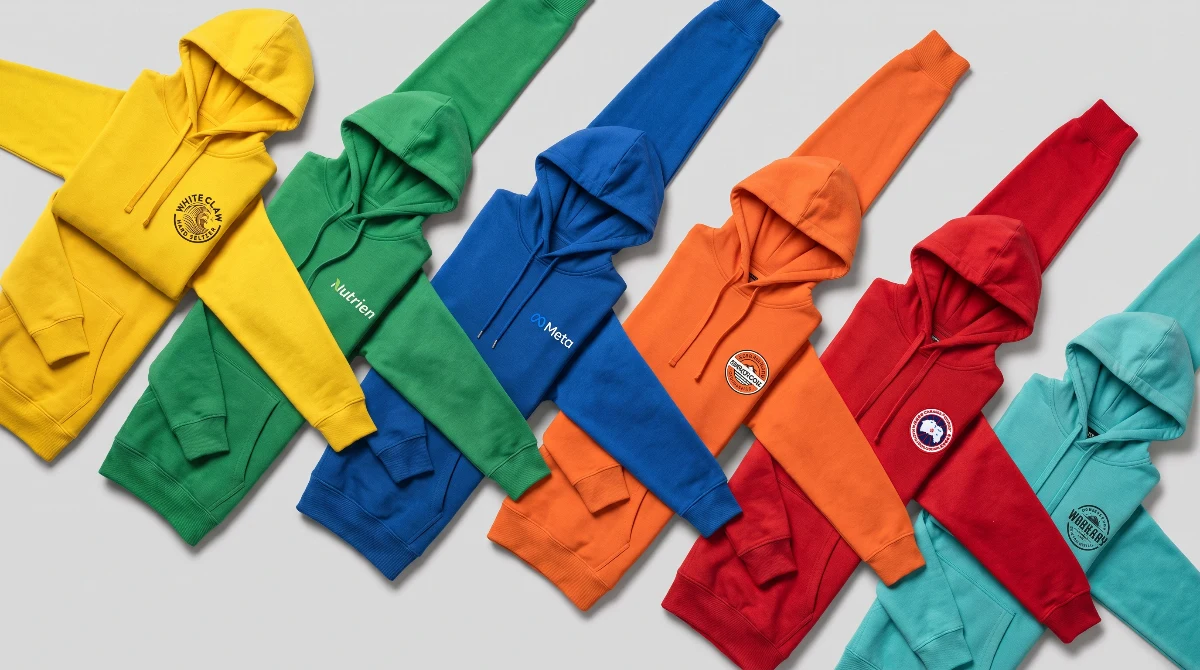
When Custom Ink asked employees to pick their top three items for an ideal welcome kit, a branded hoodie or jumper came first (34%), followed by branded T-shirts (32%) and a gift card or voucher to choose their own merchandise (29%). The same survey found 64% of employees say low quality branded gear creates a negative impression of the employer, so a smaller number of good items beats a box full of filler.
| Item | Rough cost per unit | How often it gets used | Good to know |
|---|---|---|---|
| Hoodie or jumper | $40 to $90 | High | The most requested item. Ask for sizes before the start date |
| T-shirt or polo | $15 to $45 | High | Can double as uniform. Use a good quality blank so it survives washing |
| Insulated drink bottle or keep cup | $15 to $40 | Daily | Works for office, site and remote staff |
| Notebook and pen | $10 to $30 | High in office roles | A hardcover notebook with a weighted pen is a simple set that gets used |
| Tote or backpack | $8 to $60 | Medium to high | A tote is the lower-cost option. A good backpack suits staff who commute |
| Tech accessories | $10 to $40 | High | Charging cables, power banks and laptop sleeves suit most roles |
| Cap or beanie | $12 to $30 | Seasonal | Useful for outdoor and site teams |
Cost ranges are indicative and depend on quantity and decoration.
Some businesses add healthy snacks or wellbeing resources, which work well as long as you allow for delivery timing and dietary needs. Short guides to the tools and software a new starter will use also earn their place.
"I always tell clients to pick fewer things and do them properly. A great hoodie, a decent bottle and a handwritten note will get more use and more goodwill than ten cheap bits in a big box."
Jerome Abrahams, owner, Crest Promos
Personal touches
A personal welcome letter or note from leadership was picked by 24% of employees in the Custom Ink survey, ahead of notebooks and snacks, and it costs almost nothing. A handwritten note from their manager that mentions what the team does and who they'll be working with is enough.
Other low cost additions that land well:
- a one page guide to the team, with photos, roles and one fun fact each
- a local guide with favourite coffee spots and lunch places near the office
- a small treat from a local business, such as coffee beans or chocolate
- their name on something, like a personalised notebook, a desk plate or an embroidered name on their jumper
Personalisation needs a little more lead time, so plan it early rather than leaving it to the week before someone starts.
Kits for remote and hybrid starters
For a remote employee, the kit may be the only physical contact they have with the business in their first few weeks, so delivery timing matters even more. Custom Ink found only half of organisations with remote staff managed to ship the welcome kit to the employee's home before their start date.
To get it there on time:
- collect the delivery address and clothing sizes as soon as the employment contract is signed
- allow for Australia Post or courier times to regional areas, which can add several days
- ship so the box arrives the week before they start, not on day one
- choose items that travel well and skip anything fragile or perishable
- add anything they need to work from home, such as a headset or laptop stand, if your business supplies it
Without an office tour, team introductions and regular check-ins do more of the work. Invite remote starters to team meetings from their first week so they feel part of the team.
If you hire regularly, ask your supplier whether they can store pre-packed kits and ship them direct to each new starter. That keeps every kit consistent and saves someone in the office packing boxes. The kit is only a start, though: remote starters still need regular contact after it arrives.
Budget, stock and ordering
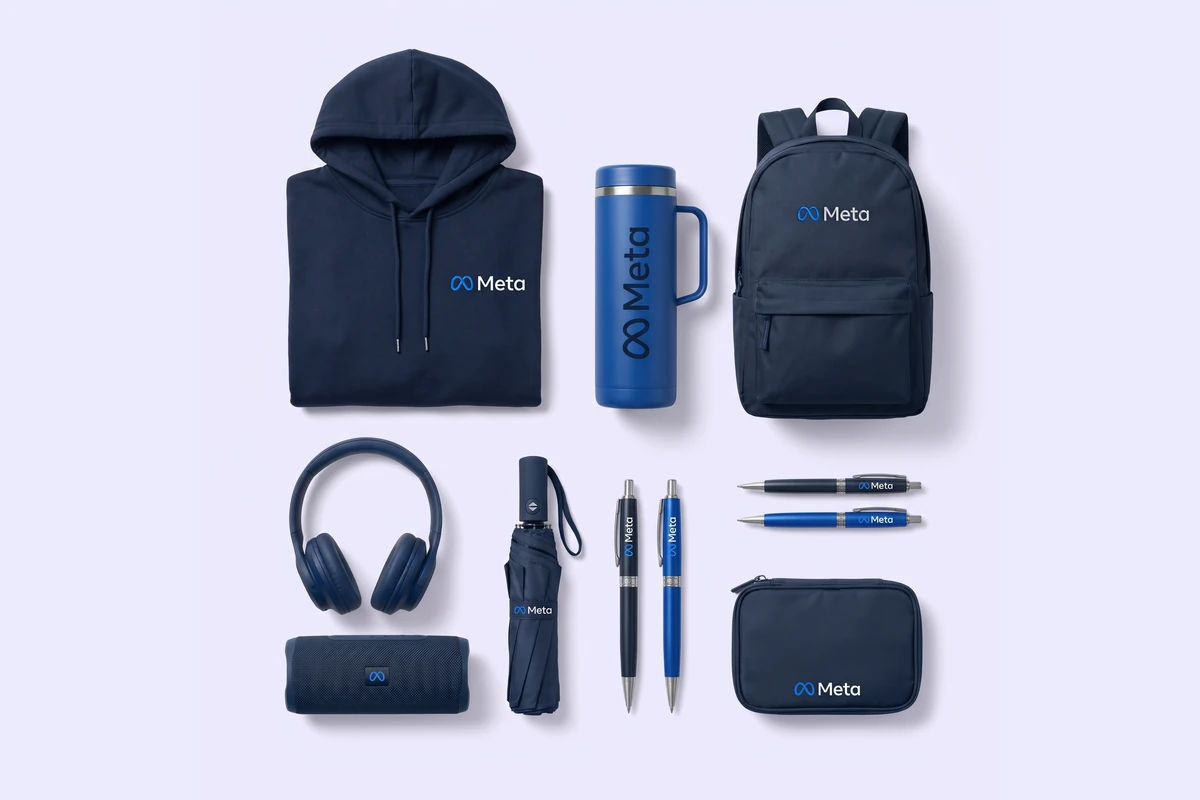
Most businesses land somewhere between $50 and $250 per kit, depending on how many items go in and whether apparel is included. A simple kit might be a bottle, notebook, pen and note. A premium kit adds a hoodie, a quality bag and a tech accessory.
Ordering one kit at a time is expensive because setup costs and minimum order quantities apply to every run. If you hire steadily, order non-sized items like bottles, notebooks and bags in bulk and hold them in stock. Apparel is harder because of sizing. Keeping a spread of the most common sizes on hand, usually M to XL, and ordering the rest as needed is a practical middle ground.
Standard branded items usually take two to three weeks from artwork approval, with apparel and personalised items sometimes taking longer. Build that into your planning at offer stage so the kit is ready when the new starter walks in.
Check the tax side with your accountant as well. Gifts to employees can have fringe benefits tax implications depending on their value and type, and the rules differ for items used for work.
Things to leave out
Skip anything that looks like it was chosen to use up old stock. Leftover event merchandise from three years ago with an outdated logo sends the wrong message on someone's first day.
Cheap novelty items, like stress balls, plastic keyrings and flimsy pens, add bulk to the box but rarely get used. Food with a short shelf life can be a problem if the kit sits on a desk over a weekend, and some new starters will have allergies or dietary requirements you don't know about yet.
Be careful with apparel in a single generic size or cut. A T-shirt that doesn't fit is worse than no T-shirt, and asking for sizes beforehand takes a single question in your pre-start email.
Employee onboarding kit FAQs
How much should I spend on an onboarding kit?
Most businesses spend between $50 and $250 per kit. Put the money into a few quality items rather than many cheap ones, since 64% of employees in the Custom Ink survey said low quality branded gear gives them a negative impression of the employer.
When should a new employee receive their kit?
On their first day for office staff, and the week before they start for remote employees. A kit that turns up weeks late can make people feel less included than no kit at all.
Do I have to include the Fair Work Information Statement?
You have to give it to every new employee before, or as soon as possible after, they start, but it doesn't have to be printed in the kit. It can go in the employee handbook or be sent by email or link. Casual and fixed term employees need their extra statements as well.
How do I get clothing sizes without spoiling the surprise?
Ask in your pre-start email alongside bank and super details. Most people appreciate being asked, and it avoids a box of unwearable apparel.
Should every role get the same kit?
Keep a common base so everyone feels part of the same business, then add role-specific items. A site worker might get a quality cap and insulated bottle, while an office starter gets a notebook and laptop sleeve. Guides for the tools, software or processes the role uses are worth adding too.
Can I reuse leftover event merchandise?
Only if it's current, good quality and something you'd be proud to hand over. Old stock with an outdated logo is better given away elsewhere.
Before you order: onboarding checklist
Before you talk to a supplier, work out:
- how many people you expect to hire over the next six to twelve months
- which items suit every role, and which are role-specific
- your budget per kit
- who writes the welcome note and who hands the kit over
- how the kit fits with the rest of your onboarding plan, such as training sessions and first-month check-ins
With that in hand, a supplier can recommend what to order in bulk, what to keep in sizes and how to package it so every new starter gets the same experience. After their first month, ask a few new starters what they thought of the kit and adjust the next order.
Send your expected hires, budget per kit and the items you're considering. We'll come back with itemised options the next business day.
- Gallup, Why your onboarding program may not be working
- Gallup, Practices for better employee onboarding
- Custom Ink, We asked 300+ employees what they want in a welcome kit
- Custom Ink, New hire welcome kit ideas and survey findings
- Custom Ink, The welcome kit confidence gap
- Fair Work Ombudsman, Fair Work Information Statement
- Australian Taxation Office, Superannuation standard choice form
- Australian Taxation Office, Employment forms in ATO online