Put the same detailed questions to every branded merchandise vendor you're considering before you look at a single unit price. A branded merchandise vendor comparison works best when you assess each supplier against the same criteria: product range, turnaround times, customisation methods, account management, pricing transparency and quality compliance. That way you can judge reliability, consistency and service fit, not just the cost of a pen.
For businesses and organisations buying branded promotional merchandise, that approach gives you something concrete to score and compare before deadlines slip, logos are applied incorrectly or repeat orders become inconsistent. This guide shows you what to check across product availability, quote and proof turnaround, logo decoration options, pricing breakdowns, safety standards and vendor scoring so you can choose a supplier with more confidence.
"Most people compare promo suppliers on the price of a pen. The real differences show up when a deadline moves, a logo looks wrong or you need the same order again in six months."
Jerome Abrahams, owner, Crest Promos
"Do you hold the branded merchandise I need in Australian stock?"
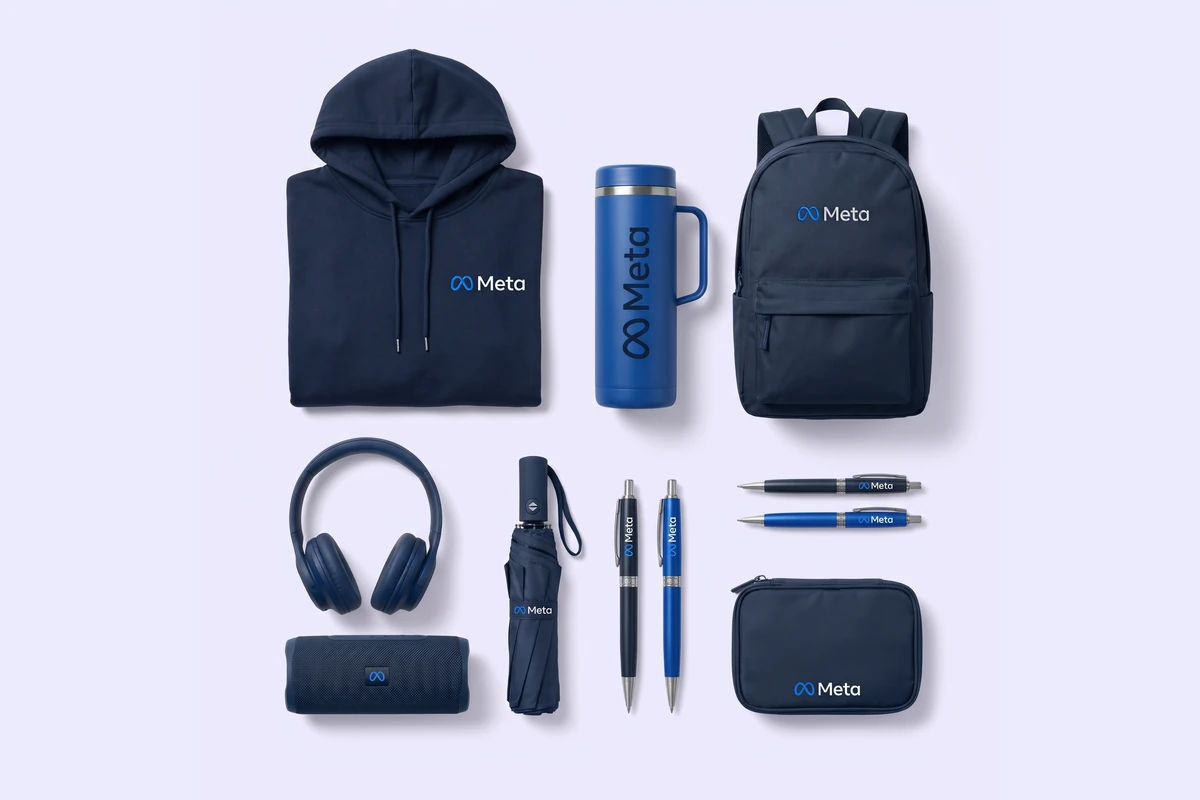
A wide range lets you get apparel, drinkware, bags, stationery and event items from one place, which keeps logo colours and placement consistent and means one contact when you need uniforms, giveaways and welcome kits in the same month. The size of a catalogue only helps if the products are actually available, though.
A strong vendor can tell you which items sit in local stock, which are imported to order and roughly how long each takes, but the right choice also depends on your budget, order volume and fulfilment needs. Traditional bulk suppliers usually offer a lower unit cost but come with higher minimums, while print-on-demand removes minimum order requirements for low volume orders such as customer gifts. A strong vendor will offer more than one quality level in a category, source items outside the catalogue when you need them and back up any sustainability claim with material details. A huge online catalogue where nobody can say what's available this month, or whose model doesn't suit recurring or more complex needs, is a reason to keep looking.
"How quickly will I see a quote and a proof?"
Turnaround covers how fast a vendor comes back with a quote and a proof, as well as how long production and shipping take once you approve it. Slow quoting can use up a week before production has even started.
Listen for specific times based on the product and decoration method, and ask whether minimums differ between apparel and accessories. Quantity affects lead time, so a vendor should ask for your quantity and deadline before recommending options. Listen for an honest note on how they stretch before Christmas, at the end of the financial year and at the start of the school year. Local stock and in-house decoration usually mean a faulty item can be fixed quickly. If every product is promised the same fast turnaround all year round, ask what happens when they miss it.
"Can you show me my logo on the actual promotional products?"
The decoration method decides how your logo looks and how long it lasts, so it should suit the product, the artwork and the brief. A capable vendor offers screen printing, embroidery, digital print, digital transfers and laser engraving at a minimum, with pad printing, debossing, sublimation and custom packaging as useful extras.
The proof is where you see whether they review artwork before production and get it approved. It should show your logo at actual size on the actual product and colour, with Pantone or thread colours listed and any names or numbers laid out correctly. The best sign of all is a vendor who tells you when a logo needs simplifying for embroidery or engraving. A generic mock-up on a stock photo tells you very little, and a capable team should recommend the best method for the product rather than just placing the logo anywhere.
"Will HR and marketing teams deal with the same person every time?"
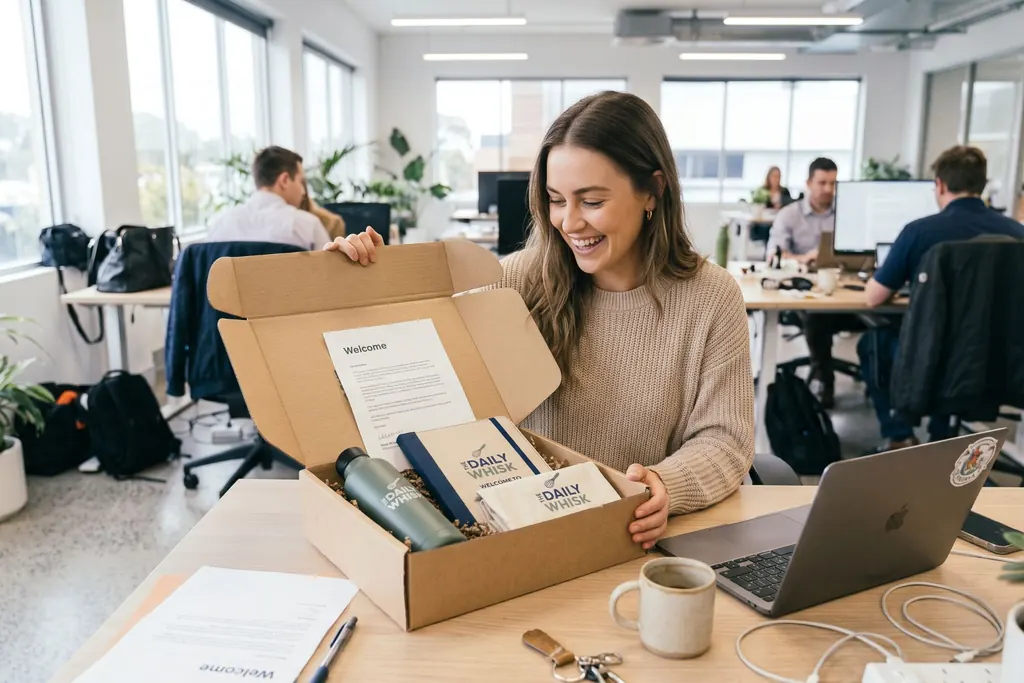
Account management is the hardest thing to judge from a website, but customer service is a crucial part of choosing a branded merchandise vendor and one of the easiest things to regret later. Some vendors route every enquiry to whoever is free, so you explain your brand, sizing and delivery addresses again on each order, including onboarding kits and welcome packs for new hires. Others give you one person who knows your account, remembers which hoodie blank you chose last year and knows which office needs deliveries before 10am.
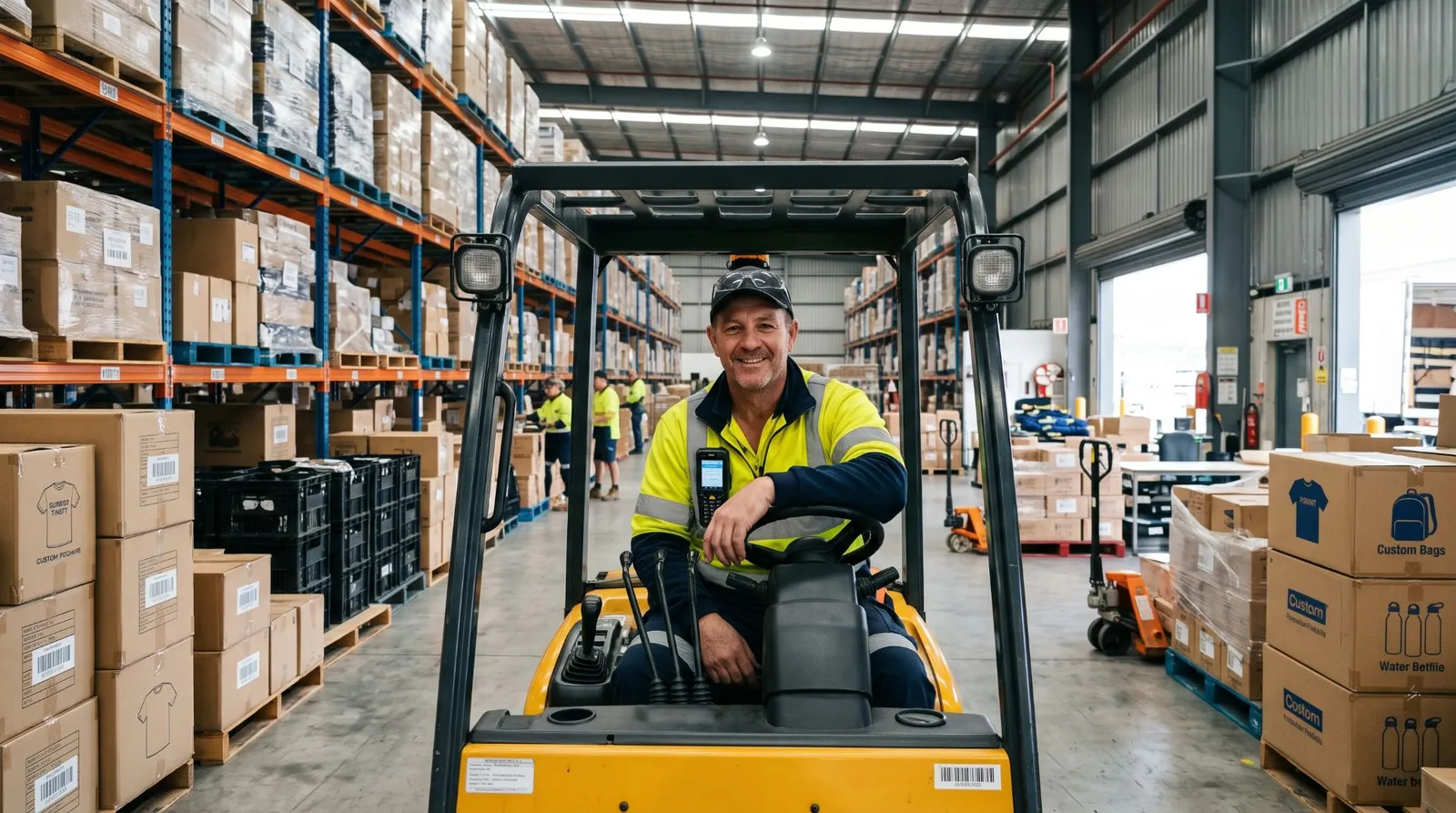
Ask who your contact will be, how quickly they usually reply and who covers them when they're on leave. If you run several sites, ask how they've handled rollouts across multiple locations and whether they can hold stock in a warehouse, handle fulfilment and pack orders for on-demand shipping across ongoing programs. When they can do that reliably, they're acting as a merchandise partner, not just a supplier. This matters most for companies with distributed teams or recurring merch needs. "Just email the general inbox" is an honest answer, but it tells you what the service will be like.
"Can you break the quote down line by line?"
Unit prices are easy to compare and often misleading. An itemised quote shows the product, decoration, setup or digitising fees, freight and GST separately, so you can see the true cost of each item, compare vendors fairly, and check whether they help match the product selection to your budget rather than just push the cheapest unit price.
While you're reading it, check:
- whether prices are ex or inc GST
- whether setup fees apply only once or on every reorder
- what freight costs to each delivery address
- whether the quote is based on low minimums or larger bulk quantities
- whether small order or rush fees apply
- what happens if a reprint is needed because of a production fault
A vendor who's clear about money at the quote stage is usually straightforward when something goes wrong.
"How do you check products meet Australian safety standards?"
Promotional products can create legal obligations under the Australian Consumer Law like any other consumer goods, especially when they are given to employees, event attendees or customers, and some product categories carry more risk than others. Since 22 June 2022, products containing button or coin batteries, such as light-up keyrings, flashing badges and novelty gadgets, have had to meet mandatory ACCC safety and information standards, including battery compartments young children can't open. Many earlier recalls in this area involved low-value promotional items with lights or sounds. Clothing and other textiles also need to meet Australian care labelling requirements, which can catch marketing teams off guard.
A good vendor can explain their checks for battery-powered items, children's products and anything that touches food or drink, supply test reports or certificates for higher risk items and send a physical sample before a large order, because how people see a branded product still depends on its quality and fit. A true merchandise partner should also manage regulatory compliance and quality assurance, including quality control checks on higher-risk categories, because breaches can carry legal penalties.
Sustainability claims also need care. Greenwashing means making unsupported environmental claims, and statements such as "carbon neutral" or "recycled" must be accurate and substantiated. The ACCC has made environmental and sustainability claims an enforcement priority. Larger programs may also need attention to supply-chain reporting risks under the Modern Slavery Act 2018.
It's also worth looking the vendor up on the Australian Business Register's ABN Lookup and asking for a couple of references from businesses like yours, then checking whether they can source products your customers will actually use, including bags that carry your logo in everyday settings.
Scoring the answers
Once you've asked every vendor the same questions, score each answer from 1 to 5 and weight the criteria to suit your business. A company running a single trade show might weight turnaround and price highest, while one planning a broader rollout should score against its audience, brand objectives, brand consistency and how the merchandise will be used.
Corporate branding and marketing campaigns work best when each branded product suits the audience and is useful enough to be kept, rather than being chosen on price alone.
| Criterion | What a 5 looks like | Vendor A | Vendor B | Vendor C |
|---|---|---|---|---|
| Product range | Thousands of products across all major categories, with quality tiers and sourcing for items outside the catalogue | |||
| Turnaround | Clear quotes and proofs, clear production times and honest peak season lead times | |||
| Customisation | Every major decoration method, Pantone matching and proofs on the actual product | |||
| Account management | One dedicated contact who knows your account, with experience in multi-site rollouts | |||
| Pricing transparency | Itemised quotes showing product, decoration, setup, freight and GST | |||
| Quality and compliance | Clear safety checks, samples on request and a defined fix for faults | |||
| Total (weighted) |
Prioritise product quality. Well made branded products get kept and used, which is what builds brand recall, while cheap merchandise often ends up in landfill quickly.
Send every vendor the same brief, ideally for a real upcoming order with products, quantities, delivery addresses and a date, so you're comparing like with like. Stronger vendors will use it to guide product selection, while others may simply send catalogue options. Then ask for a sample of the item that matters most, and check whether the vendor gives you access to the better product or apparel options you actually want to compare.
Crest Promos' answers
Crest Promos is the author's own business, so here are its answers to the same questions. Check them the way you'd check anyone else's.
| Criterion | How Crest Promos addresses it |
|---|---|
| Product range | More than 4,000 customisable products across apparel, headwear, drinkware, bags, stationery, tech and event merchandise, including notebooks and branded pens |
| Turnaround | Free quotes and digital proofs. Standard stocked options can move faster, while custom merchandise may take longer |
| Customisation | Proofs show your logo on the product before anything is produced |
| Account management | A dedicated single contact who acts as a merchandise partner for clients running recurring corporate gift or client gift programs |
| Multi-site support | Experience rolling out merchandise and uniforms across multiple sites, plus warehouse storage, fulfilment and shipping for ongoing programs, including welcome kits for new hires, so kits stay consistent between locations |
"One contact makes the biggest difference. When the same person handles your account every time, they already know your logo files, your sizes and your deadlines, and you don't have to explain any of it again."
Jerome Abrahams, owner, Crest Promos
Jerome Abrahams owns Crest Promos, an Australian promotional products company known for hands-on customer service and quality products that help brands look after teams and customers. He has 30+ years of experience in the industry and has worked with brands including Meta, JCDecaux, Nutrien, White Claw and amps.
Last reviewed November 2026.
Send us the brief you're sending other vendors: products, quantities, delivery addresses and your date. We'll come back with options, pricing and free digital proofs.
- Button battery standards for the promotional products industry (Australasian Promotional Products Association)
- Button and coin batteries mandatory standards (ACCC Product Safety Australia)
- Button battery standards and earlier recalls (Clayton Utz)
- Care labelling for clothing and textiles mandatory standard (ACCC Product Safety Australia)
- Environmental and sustainability claims guidance for business (ACCC)
- Modern Slavery Act 2018 (Federal Register of Legislation)