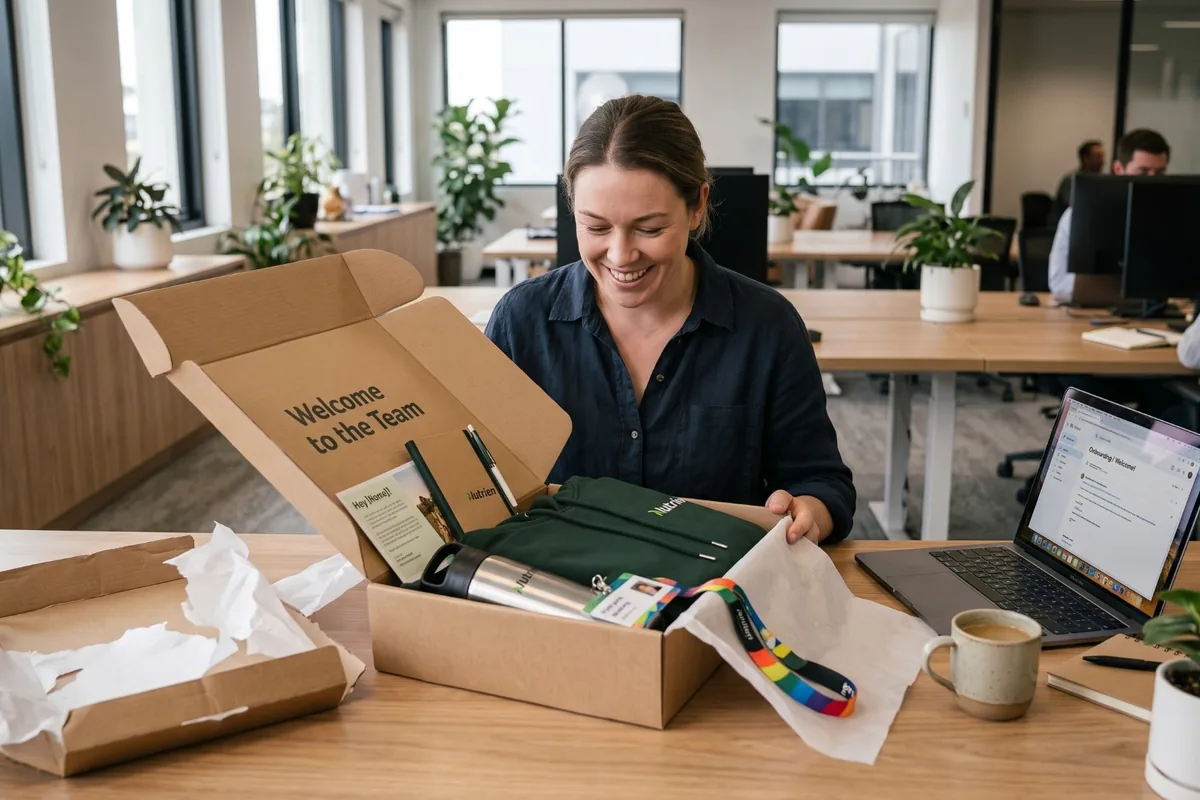
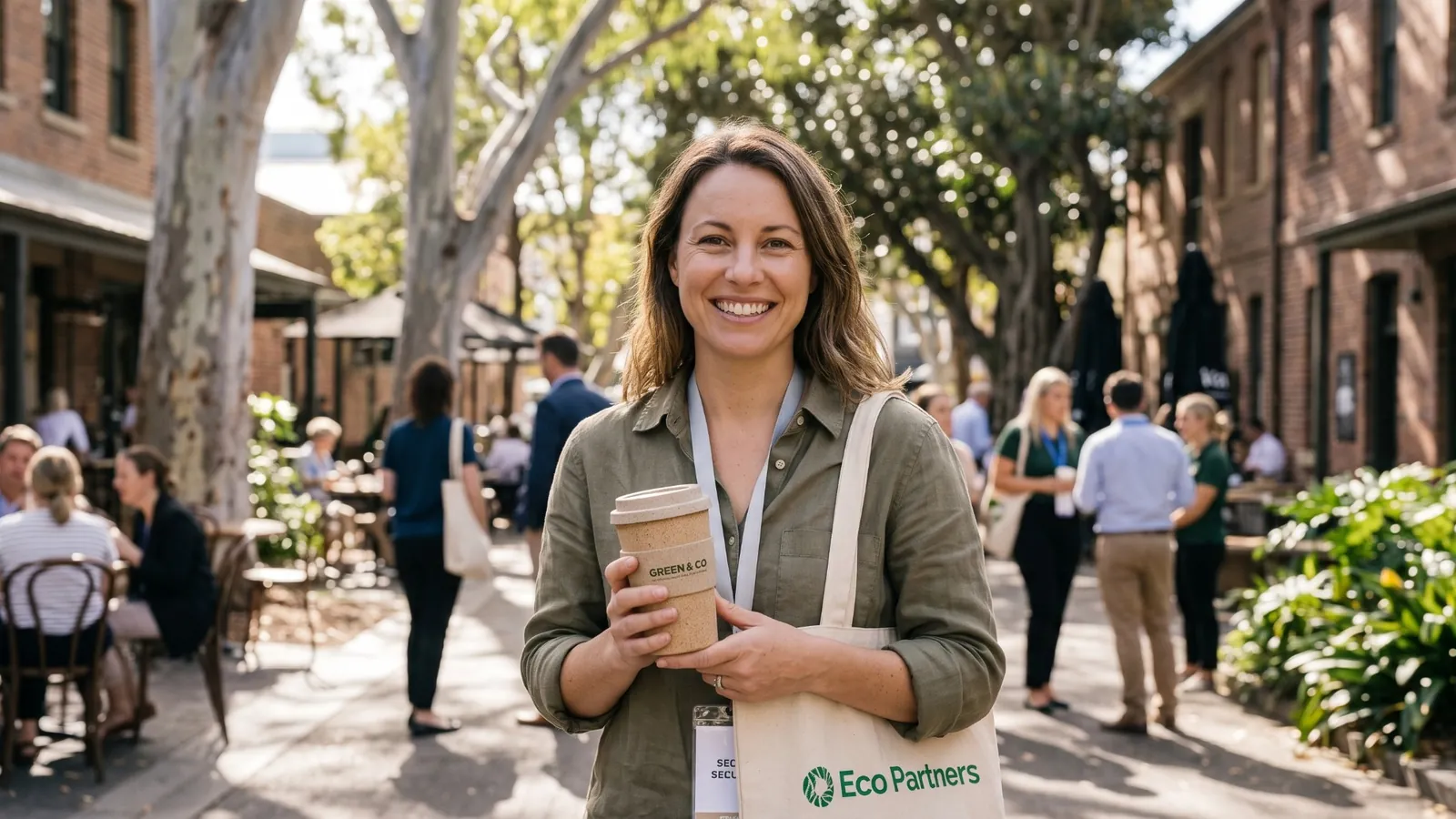
The most sustainable promotional products are the ones people use for years: good quality reusable drinkware, sturdy tote bags made from recycled or durable materials, pens and stationery made from recycled or responsibly sourced materials and plantable items like seed packets. The material matters, but how long an item stays in use matters more. A recycled tote that's used for five years does far more good than a "green" freebie that's binned after one event.
"Clients often ask for eco-friendly merch and expect it to be a compromise. It doesn't have to be. A quality bottle or bag that someone uses every day is better for the planet and better for your brand than a cheap item with a leaf printed on it."
Jerome Abrahams, owner, Crest Promos
Written by Jerome Abrahams, owner of Crest Promos, an Australian promotional products company known for its customer service and for pushing for quality across the industry. Jerome has more than 30 years of experience helping Australian businesses choose branded merchandise, including sustainable and recycled ranges.
Environmental claims guidance comes from the Australian Competition and Consumer Commission (ACCC). Life cycle figures come from the Danish Environmental Protection Agency and published reusable cup assessments. Seed rules come from Quarantine WA. Product advice was checked against what Crest Promos sees on real orders. Sources are listed at the end.
Last reviewed October 2026.
Make claims you can back up
Before choosing products, it helps to know how you'll talk about them. The ACCC treats greenwashing as making a product, service or business seem better for the environment than it really is, and its guidance for businesses sets out principles for environmental claims, starting with making accurate and truthful claims and having evidence to back them up. When the ACCC swept business websites in late 2022, it found 57% of those reviewed were making potentially misleading environmental claims.
For branded merchandise, that means:
- saying exactly what's eco-friendly about an item, such as "made from recycled PET bottles", rather than calling it "green" or "sustainable"
- asking your supplier for evidence, such as material certificates, recycled content percentages or certifications like FSC and OEKO-TEX, before you print a claim on the product or packaging
- being careful with words like "biodegradable" and "compostable", which only hold true under specific conditions
A promotional product with an honest, specific claim builds more trust than one with a vague green label.
Eco-friendly promotional products at a glance
| Product | Common eco materials | Environmental benefit | Brand benefit | Watch out for |
|---|---|---|---|---|
| Tote bags | Recycled PET, recycled cotton, jute, canvas | Replaces single-use bags when reused often | Carried in public for years | Cotton needs many uses to pay off its footprint |
| Drink bottles and keep cups | Recycled stainless steel, glass, recycled plastics | Replaces hundreds of disposable cups and bottles | Used daily, often on desks | Bamboo-melamine cups and cheap lids that fail early |
| Pens | Recycled plastic, recycled aluminium, bamboo, cardboard | Less virgin plastic | Low cost, high volume | Very cheap pens that run dry fast |
| Notebooks | Recycled paper, stone paper, cork covers | Lower impact paper | Strong for professional audiences | Mixed materials that are hard to recycle |
| Seed packets and seed paper | Paper, native or edible seeds | Grows into something | Memorable and shareable | Interstate quarantine rules, especially for WA |
| Apparel | Recycled polyester, organic cotton | Lower impact fibres | Long wear if it fits and lasts | Poor quality blanks that end up in landfill |
| Lunch boxes and cutlery sets | Stainless steel, bamboo wood | Cuts takeaway waste | Daily use | Bamboo fibre plastic composites |
Recycled and reusable tote bags
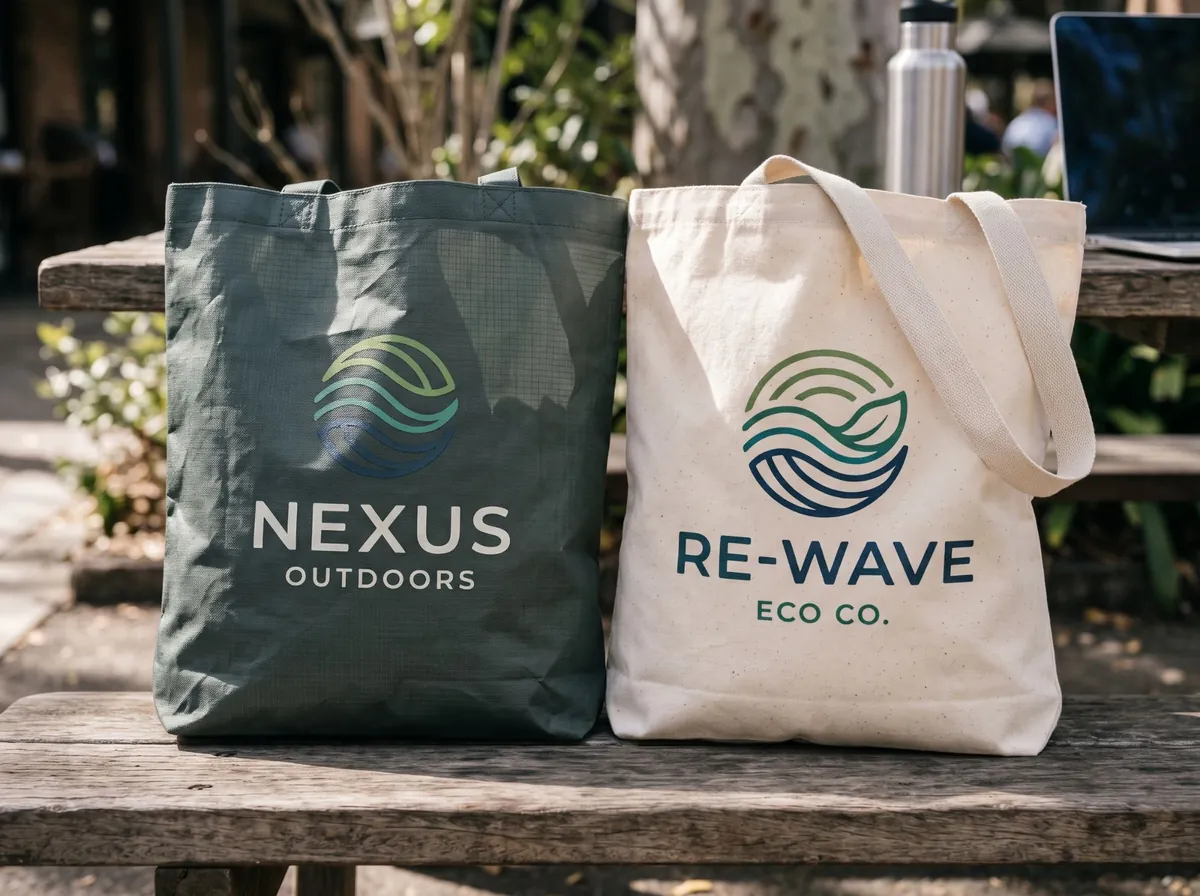
Tote bags are among the most practical eco-friendly promotional items because people carry them in public, often for years. They're not automatically sustainable, though. A 2018 life cycle assessment for the Danish Environmental Protection Agency found a conventional cotton bag would need to be used thousands of times to match a single-use plastic bag across all of the environmental impacts it measured, mostly because cotton farming uses a lot of water, land and fertiliser. Looking only at climate impact, cotton totes need far fewer uses, in the order of 50 to 150 according to later UN Environment Programme analysis.
That doesn't make cotton totes a bad choice. It means the best tote is one that's strong, useful and good looking enough to be used week after week, which also keeps your logo out in public. Some practical pointers:
- Recycled PET totes are made from plastic bottles and are light, tough and water resistant.
- Recycled or heavy canvas cotton lasts longer than thin calico, so it gets more uses out of the same footprint.
- Jute suits rustic, food and farm brands and holds heavy loads.
- A smaller, simpler print uses less ink and makes the bag more likely to be used everywhere, not just at your event.
Reusable drink bottles and keep cups
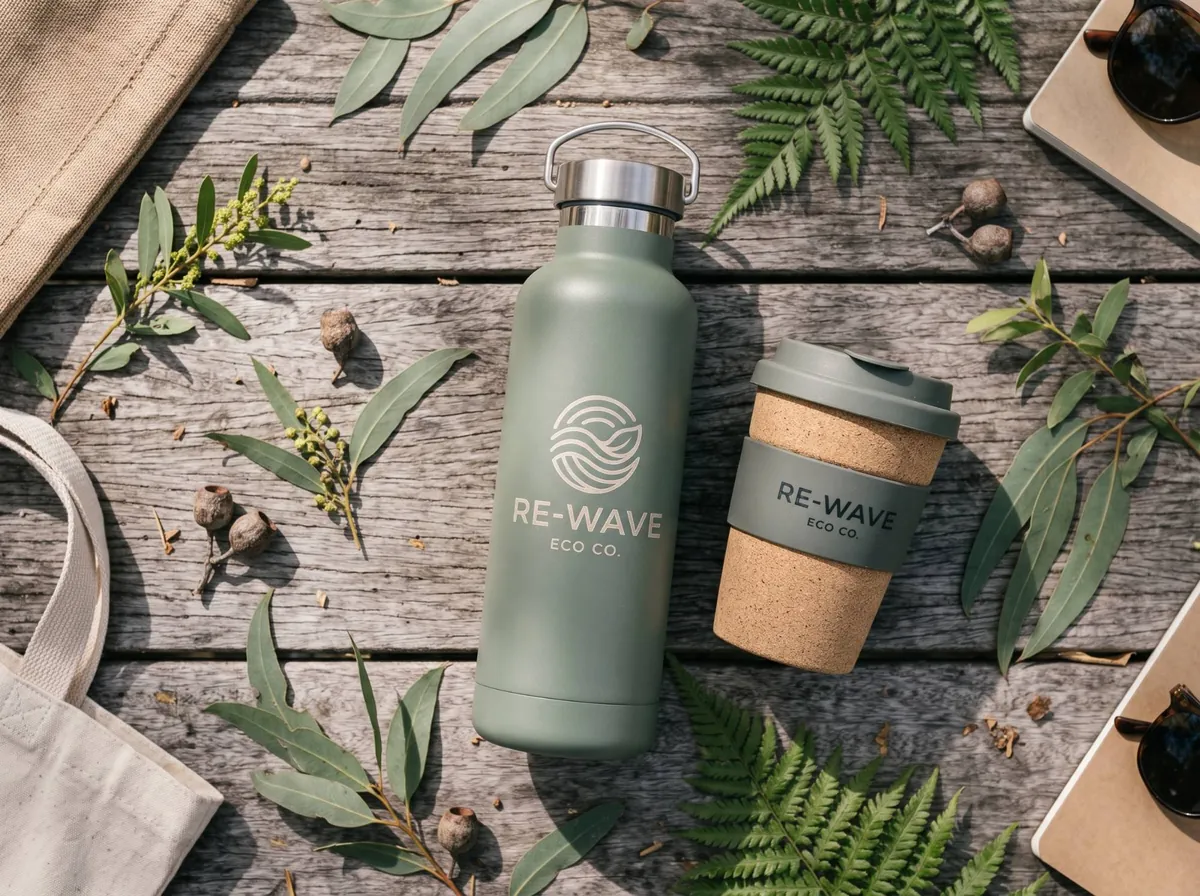
Reusable drinkware is one of the strongest eco merchandise choices because it replaces disposable cups and bottles every day. Drink bottles and reusable coffee cups sit on desks and in hands, where your logo is seen constantly.
The environmental payback depends on the material and how long the item lasts. Australian company KeepCup's life cycle assessments put the break-even point at around 20 to 24 uses for its plastic and glass cups and about 66 uses for its insulated stainless steel cup, compared with single-use cups. Independent critics have argued the true figure for steel can be much higher once all the embodied carbon is counted, which reinforces the same point: buy well made drinkware that will last for years, not months.
Avoid reusable cups and plates made from bamboo fibre mixed with plastic. They're often marketed as natural, but the bamboo is bound with melamine-formaldehyde resin. Germany's Federal Institute for Risk Assessment found more than 35% of the bamboo mugs it tested released harmful substances above safety limits, and the UK Food Standards Agency has told businesses to stop selling plastic containers and cups that contain bamboo and similar plant fibres. Stainless steel, glass and good quality recycled plastics are safer choices for hot drinks.
Look for replaceable lids and seals, since a cup is only useful while its lid still works.
Bamboo, recycled and cardboard pens
Pens are the classic high-volume giveaway, so even a small change in material adds up across thousands of units. Options include solid bamboo barrels, recycled plastic, recycled aluminium and cardboard pens with a plastic-free body.
Solid bamboo pens are a different product from the bamboo-plastic composites mentioned above, since they're made from the cane itself rather than bamboo powder mixed with resin. Ask your supplier exactly what the barrel is made from before calling the pen plastic-free.
The bigger environmental win is choosing a pen that writes well for a long time. A cheap eco pen that dries up in a week is still waste. A refillable metal or bamboo pen gets kept and used for months, keeping your logo in front of people the whole time.
Recycled notebooks, stone paper and cork covers work well alongside eco pens for conferences or professional services firms.
Seed packets and plantable paper
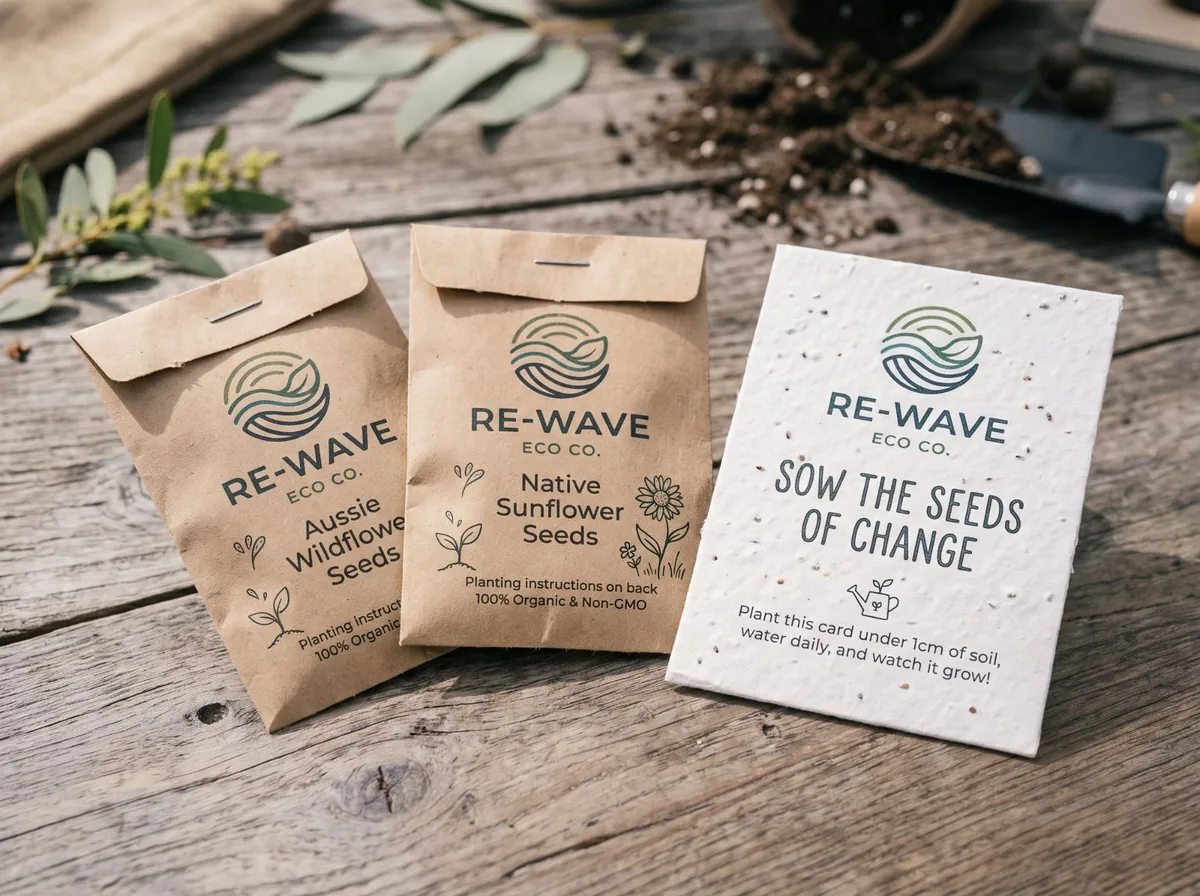
Branded seed packets and seed paper cards turn a giveaway into something that grows. They're cheap to post, light to carry and memorable, which makes them popular for direct mail, event bags, landscaping and garden businesses, councils and any brand with a growth or renewal message. Native wildflowers, herbs and easy vegetables like lettuce or basil are common choices.
Seeds do come with biosecurity rules. Western Australia is free of many pests, diseases and weeds found elsewhere in the country, and Quarantine WA prohibits more than 940 seed species from entering the state. Commercial seed packets taken into WA must be unopened, labelled with the botanical name and of a permitted species. In 2024, WA also stopped tomato, chilli and capsicum seeds coming in from other states after a virus was detected in Australia.
If your campaign could reach WA, or Tasmania, which also has its own entry rules, ask your supplier to confirm the seed species is permitted in every state you're sending to. Choosing a locally suitable native species also avoids accidentally spreading a weed.
Recycled apparel and other options
T-shirts, hoodies and caps are now widely available in recycled polyester made from plastic bottles, organic cotton and blends of the two. The most important factor is still quality. A heavier, well cut garment that fits gets worn on weekends, while a thin promo tee often ends up as a rag or in landfill.
Other eco options worth considering include:
- stainless steel lunch boxes and cutlery sets in a fabric roll
- solid bamboo or wooden cutlery for staff kitchens, rather than bamboo fibre composites
- beeswax wraps for food and hospitality brands
- recycled paper calendars and planners
- solar power banks and cable sets from suppliers that can confirm safety certification
Locally made products also reduce freight distances. If Australian made matters to your brand, ask your supplier which items in a range are made here and which are imported and decorated locally.
Sourcing a sustainable range in one place
Most businesses want more than one eco product, perhaps a bottle and tote for staff, pens for events and seed cards for a mail-out. Sourcing them separately means juggling several suppliers, different proof processes and mismatched logo reproduction. Ordering a whole range through one supplier keeps colours, logo sizes and lead times consistent.
Ask to see a proof of every item before anything is produced, especially on natural materials. Laser engraving looks different on bamboo than on steel, and a logo that prints sharply on PET can soften on textured jute or recycled paper. Crest Promos, for example, sources a full range of sustainable branded merchandise and provides free digital proofs, so you can check how your logo looks on each material before committing to a bulk order. Minimum order quantities vary by product and branding method, so check each product page or ask your supplier.
"Natural materials don't behave like plastic. Bamboo has a grain, jute has texture and recycled paper has flecks. Seeing a proof first means there are no surprises when the boxes arrive."
Jerome Abrahams, owner, Crest Promos
Eco-friendly promotional products FAQs
What is the most sustainable promotional product?
The one that gets used the longest. Quality reusable drink bottles, keep cups and sturdy tote bags usually come out ahead because they replace disposable items every day for years.
Are bamboo products always eco-friendly?
No. Solid bamboo pens and cutlery are made from the plant itself, but many bamboo cups and plates are bamboo powder bound with melamine resin. They aren't biodegradable, and European and UK food safety authorities have raised concerns about chemicals leaching into hot drinks.
Are cotton tote bags better than plastic bags?
Only if they're reused many times. Life cycle studies show a cotton bag has a much bigger production footprint than a plastic bag, so choose a sturdy, useful design people will keep carrying.
Can I send branded seed packets interstate?
Usually, but Western Australia has strict rules and prohibits hundreds of seed species. Check that your chosen seeds are permitted in every state you're sending to, and keep packets sealed and labelled with the botanical name.
Do eco-friendly promotional products cost more?
Some do, though often not by much. Recycled PET totes, recycled plastic pens and seed cards are priced close to conventional versions, while stainless steel drinkware and organic cotton apparel cost more but last longer.
How should I describe eco merchandise in my marketing?
Be specific and have evidence. Say "made from recycled PET bottles" rather than "eco-friendly", only use terms like "biodegradable" when your supplier can back them up, and keep supplier documentation in case anyone asks.
Before you order
Work out who the merchandise is for, how they'll use it and where it's being sent, then shortlist products they'll keep using. Ask your supplier for material details you can use in your marketing, a proof of each item and confirmation that any seeds are allowed in every state on your list.
Tell us who it's for, your quantities and your logo. We'll suggest sustainable options, with pricing and a free proof within one business day.
- ACCC, Environmental claims guidance and the 2022 greenwashing sweep (via Corrs Chambers Westgarth)
- ACCC eight principles for environmental claims (K&L Gates)
- Danish Environmental Protection Agency, Life cycle assessment of grocery carrier bags
- The Conversation, How many times you need to reuse shopping bags
- CNN via KSL, Reusable bag reuse figures and UNEP analysis
- KeepCup, Break-even figures
- United Baristas, Why KeepCup can't save the world
- Chemistry World, Bamboo mugs leaching formaldehyde and melamine
- UK Food Standards Agency, Notice to retailers on plastic containers containing bamboo
- WA Department of Primary Industries and Regional Development, Importing seed to Western Australia
- Quarantine WA, Quarantine information for travellers
- Diggers Club, Tomato, chilli and capsicum seed restrictions into WA