Sustainable branded merchandise comes down to how you buy as much as what you buy. Ordering fewer items that people keep for years, printing them sensibly, packing and shipping them efficiently and describing them honestly will do more for your footprint than swapping a plastic pen for a bamboo one. If you're after a rundown of individual products, our guide to eco-friendly promotional products covers totes, drinkware, pens and seed packets in detail.
"The greenest merch order is usually the smaller one. Work out who it's really for, buy something good enough that they'll keep it and you've already done most of the work."
Jerome Abrahams, owner, Crest Promos
Jerome Abrahams owns Crest Promos, an Australian promotional products company known for hands-on customer service and quality products. He has 30+ years of experience in the industry and has worked with brands including Meta, JCDecaux, Nutrien, White Claw and amps.
Last reviewed November 2026.
"Choosing eco friendly materials makes merch sustainable"
Materials matter, but how long an item stays in use matters more. A 2018 life cycle assessment for the Danish Environmental Protection Agency found a conventional cotton tote would need thousands of uses to match a single-use plastic bag across every environmental impact it measured, because growing cotton takes so much water, land and fertiliser. A recycled or natural-fibre item that's binned after one event has still cost the planet something.
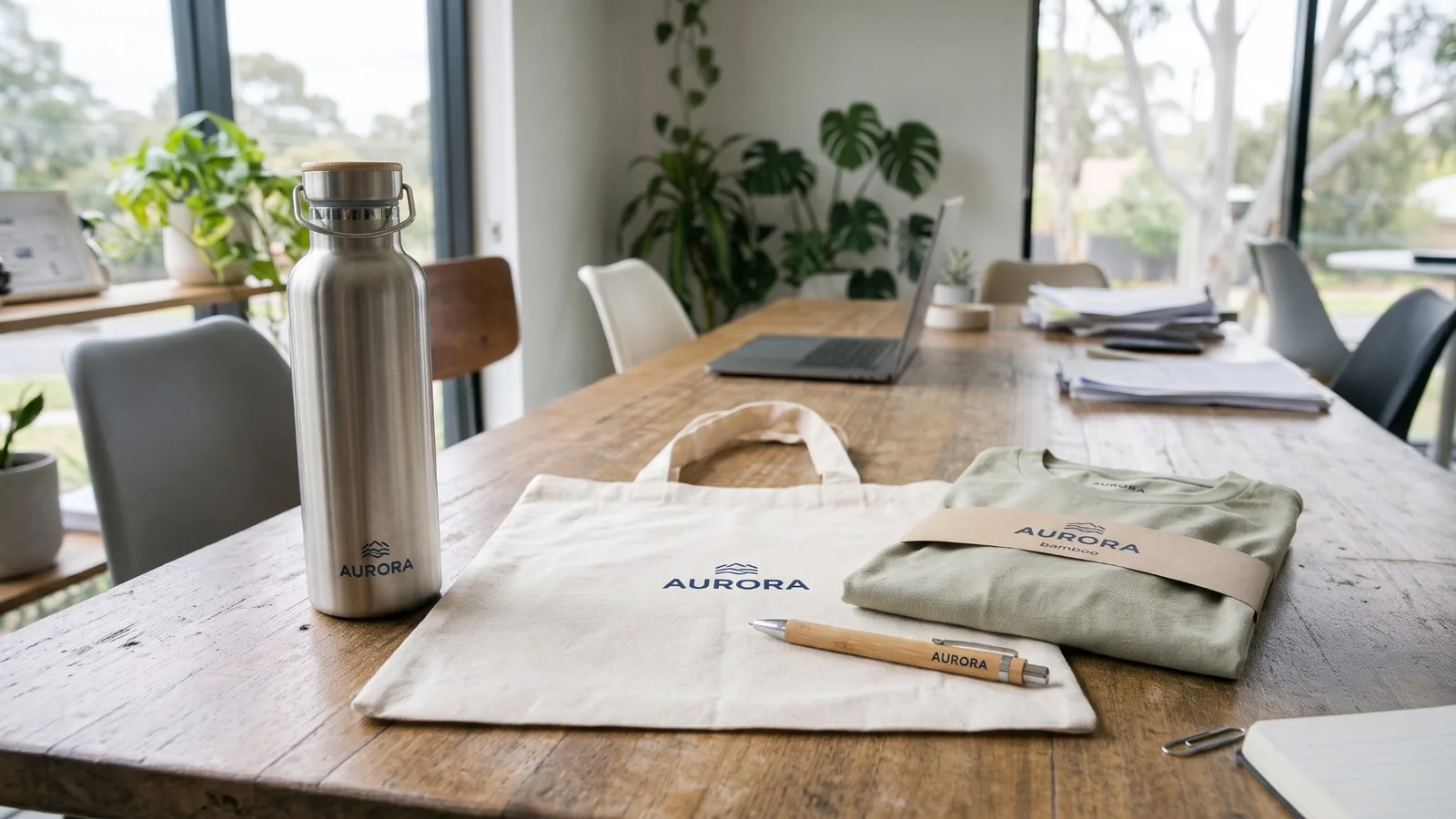
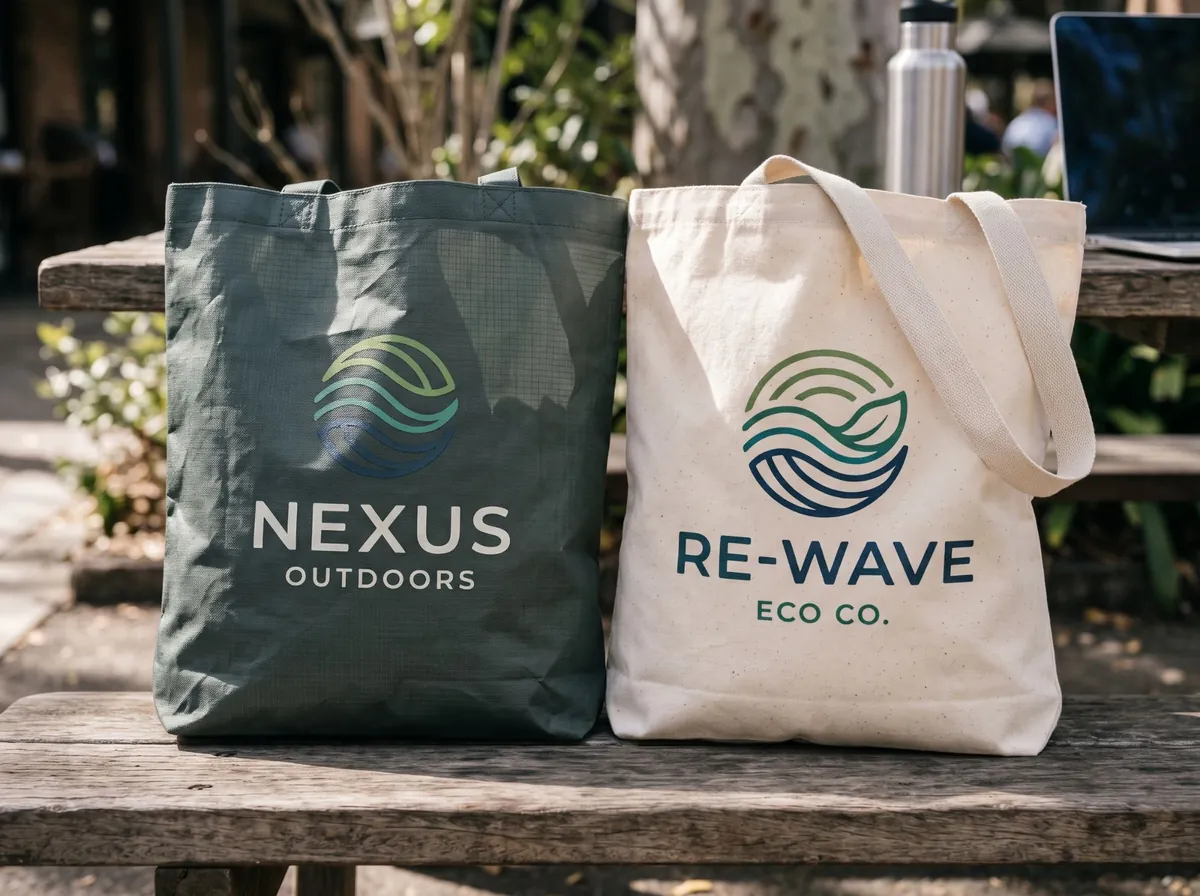
The items that come out ahead are the ones people use for years: a well made bottle, sturdy branded bags, travel mugs, a jacket that fits. Tote bags made from organic cotton or recycled fabrics are popular sustainable options for events and retail giveaways because reusable tote bags work as branded bags, can carry a company logo, help replace plastic bags, and improve brand visibility well beyond the event. These kinds of sustainable products are environmentally friendly because they replace single-use items over time. Reusable bags and reusable drink bottles also help reduce waste while staying in circulation for longer. Those items also deliver the most brand visibility. In the Advertising Specialty Institute's 2026 US study, usefulness was the main reason people gave for keeping promotional products.
"Order plenty to meet the minimum order quantity so you never run out"
Overordering creates a lot of avoidable waste in branded merchandise. Boxes of leftover conference bags, last year's event tees and items with an old logo end up in storage cupboards and eventually landfill.
A more sustainable approach is to order for the people you actually expect to reach, with a modest buffer, and keep a way to top up quickly. For items you use all year, such as staff apparel, welcome kit contents and drinkware, a supplier who holds stock for you and releases it as you need it means you can buy at bulk pricing without having everything sitting in your office. Keeping your logo version and colours consistent also stops perfectly good stock going out of date after a minor refresh.
"A recycled or biodegradable label is enough"
The ACCC describes greenwashing as making a product or business seem better for the environment than it really is. It has made greenwashing an enforcement priority, and when it reviewed business websites in late 2022, 57% were making potentially misleading environmental claims.
A recent ACCC court case shows how easily it happens. In April 2025, the Federal Court ordered Clorox Australia to pay $8.25 million over GLAD bags labelled "50% ocean plastic". The recycled plastic had been collected from communities near the ocean that had no formal recycling system, not from the ocean itself. The Court also found the wave imagery and the word "GREEN" on the packaging added to the misleading impression. Promotional catalogues use similar phrases, such as "ocean-bound plastic", so it's worth checking exactly what a supplier means before you repeat it. The same applies to claims about eco friendly materials, whether that means bamboo among renewable materials and natural materials, wheat straw blended with other inputs to cut virgin plastic use in biodegradable materials, cornstarch as a sustainable alternative to petroleum-based plastics, recycled paper in notebooks or packaging, recycled PET where a supplier should say if it comes from post-consumer plastic bottles rather than relying on vague recycling language, or any other environmental claim that still needs evidence.
Applying the ACCC's principles to merchandise
The ACCC's guidance sets out eight principles for trustworthy environmental claims. A few apply directly to branded merchandise:
- Avoid broad, unqualified terms like "eco-friendly", "green", "sustainable" or "clean". Say what's actually better, such as "branded items with a bottle body made from 100% recycled stainless steel".
- Explain any conditions. Many compostable products only break down in commercial facilities, and "recyclable" only holds true where local recycling services accept the material.
- Don't leave out important information. A bottle with a recycled body and a virgin plastic lid shouldn't be described as made entirely from recycled materials.
- Make sure visual elements don't oversell the product. Leaf icons, green packaging and recycling symbols printed on merchandise or its box can all imply a broader benefit than the product delivers.
- Have evidence ready. Keep the supplier's material certificate, recycled content percentage or test report on file for any claim you print or publish, along with ethical sourcing records and FSC-backed evidence for paper- or timber-based branded items.
The claim becomes yours
When you print a supplier's claim on your merchandise, put it in a social post or repeat it in a tender response, it becomes your business making the representation. Before signing off on any environmental wording, ask the supplier for the evidence behind it, check it matches the exact product you're ordering and keep a copy. If a claim can't be backed up, leave it off. This is general information, so talk to a legal adviser if you're making significant environmental claims.
"Decoration doesn't change the footprint"
The logo is part of the product's impact as well. Writing in The Conversation, Deakin University lecturer Trevor Thornton suggested avoiding bags with printing or decoration where possible, since it can add significantly to a bag's environmental burden.
You don't have to skip branding to reduce this. A smaller logo, fewer print colours and methods like laser engraving or debossing, which add no ink at all, all reduce what goes into each item. For custom branding, the right decoration method depends on the item's material and branding area, and different branding methods suit different finishes, such as screen printing for larger flat surfaces like bags and laser engraving for bamboo or timber items. Smaller, subtler branding also tends to get products used in more places, which helps them last longer.
"Packaging and freight are the supplier's problem"
A recycled bottle that arrives in its own plastic bag, inside a foam insert, inside an oversized carton, undoes a lot of good intentions, especially when the point is to replace disposable cups and other throwaway packaging waste with something people will keep using. Ask your supplier whether items can be bulk packed instead of individually bagged, whether gift boxes are recyclable cardboard and whether plastic-free packaging is available.
Freight adds up too, especially for businesses with several sites. Consolidating orders into fewer, larger deliveries, and planning far enough ahead to avoid air freight and rush courier jobs, cuts both the cost and the emissions of getting merchandise where it needs to go.
"Australian made is automatically the greener choice"
Buying locally made products shortens shipping distances and makes it easier to check how they were made. Australian businesses and corporate clients often also look for evidence of environmental commitments, not just local origin, when comparing suppliers. Ethical Clothing Australia, for example, accredits local textile, clothing and footwear businesses after auditing their Australian supply chain each year to check workers are paid correctly and work in safe conditions.
Local manufacturing doesn't guarantee a lower footprint on its own, though. A locally sewn garment made from a resource-heavy fabric, or one that falls apart after a few washes, can still be the worse choice. Treat Australian made as one factor to weigh alongside material, quality and how long the item will be used.
"Once it's handed out, the job's done"
What happens to an item at the end of its life, especially whether it helps phase out single-use plastics instead of becoming waste, is part of its footprint. Products made from a single material, like a stainless steel bottle or a plain cotton bag, are easier to recycle than ones that mix plastic, metal and fabric in a way that can't be separated. Items like reusable cutlery sets are practical reusable alternatives to plastic straws and other throwaway products, and reusable cups are another easy option for everyday use, while even seed packs can make a lasting impression when the design stays useful and relevant.
Design choices affect lifespan as well. Merchandise printed with a one-off campaign slogan, a specific event date or a logo that's about to change has a short shelf life. Timeless designs with your core logo keep items relevant and in use for longer, and practical pieces like reusable drinkware tend to stay useful far longer than novelty giveaways. Practical eco friendly merchandise can also reinforce brand values and improve brand reputation, especially with Millennials and Gen Z who tend to favour eco-conscious brands. Thoughtful eco friendly products can further position a company as a sustainability leader. For staff apparel, consider what happens when people leave, such as asking for uniforms to be returned so they can be reissued or recycled, helping reduce your business's carbon footprint through longer use and better recovery of branded items.
Putting sustainable branded merchandise into practice
A sustainable merchandise program doesn't need a separate policy document. Most of it comes down to a few habits applied to every order:
- decide who each item is for and order close to that number
- choose products people will use for years, and spend more per unit if it means buying fewer; think bamboo notebooks for staff kits, bamboo pens as affordable event giveaways, eco friendly stationery for desks, and travel mugs or coffee cups as reusable drinkware for ongoing use, including longer-lasting client gifts and corporate gifts. That also gives you stronger options for eco friendly gifts, while eco promotional products and sustainable giveaways can still stay practical.
- keep branding small and simple, and use ink-free methods where they suit the product
- ask for evidence behind every environmental claim before you repeat it
- ask for bulk or plastic-free packing and consolidated deliveries
- hold stock for regular items instead of reordering in a rush
- design for a long life, with your core logo and no dated slogans
It helps to work with one supplier who can cover most of your range. They can also help curate goodie bags for events or client appreciation without overordering. Crest Promos, for example, carries more than 4,000 promotional products, including recycled and reusable options, gives each client a single dedicated contact and can hold stock and pack orders for multiple sites, so you can order in sensible quantities and release them as you need them. Free quotes and digital proofs also make it easier to compare a recycled option with a conventional one before you decide. Free artwork is provided before artwork approval, and production begins only after sign-off. The minimum order quantity depends on the item, and minimum order quantities vary with branding requirements. A friendly team can help identify products, including stationery products, recycled stationery, recycled promotional products and eco friendly promotional items, that suit the campaign, with examples like recycled lanyards for corporate events and trade shows made from recycled PET sourced from more than one plastic bottle.
"Holding stock for clients cuts waste more than people expect. You order once at the right quantity, nothing goes out of date in a cupboard and every site gets the same product."
Jerome Abrahams
Tell us who it's for, your quantities and your logo. We'll suggest options, with pricing and a free proof.
- Life cycle assessment of grocery carrier bags (Danish Environmental Protection Agency)
- How many times you need to reuse your shopping bags (The Conversation)
- ASI's 2026 Ad Impressions Study: 5 compelling takeaways (Advertising Specialty Institute)
- ACCC final guidance on environmental claims (Corrs Chambers Westgarth)
- Clorox ordered to pay $8.25m over ocean plastic claims (ACCC)
- ACCC eight principles to guide environmental claims (ACCC)
- ACCC eight principles for environmental claims (K&L Gates)
- Ethical Clothing Australia (UN Global Compact Network Australia)